This podcast is the first in our “Tech Experts” series with James Stevenson and John Roberts. In this episode, we introduce our technical experts and discuss the different ways in which you can reach technical services, how to leave them an effective message and a few ways you can effectively use our Copeland Mobile app.
Host: Lindsay Headings – Digital Marketing and Content Manager, Emerson
Co-hosts:
James Stevenson – Technical Service Engineer, Emerson
John Roberts – Technical Service Engineer, Emerson
While many of us are spending much of our time at home, we have a rare window of opportunity to focus on bettering ourselves, both personally and professionally. Emerson is committed to helping HVACR contractors continue their professional education during this challenging time. Though our in-person training sessions are currently unavailable, we are pleased to offer a wide variety of free online training courses through the remainder of the calendar year.
Below are highlights of the courses applicable to commercial and residential air conditioning applications. More information about refrigeration-focused courses can be found here.
This learning plan provides an overview of HVAC and lighting systems used in commercial refrigeration markets. Topics covered include typical applications, features and benefits and the individual components used in these systems. The learning plan also contains individual training modules covering the Emerson products utilized in HVAC and lighting systems, including both mechanical components and controls.
Comfort Alert diagnostics monitor vital data from the Copeland Scroll compressor, quickly pinpointing the root cause(s) of the cooling-system malfunction – including common electrical problems, compressor defects, and broad system faults. This training provides an overview of Comfort Alert Diagnostics for Residential A/C and Heat Pump applications. Topics include device connections, basic operation, installation and wiring, troubleshooting.
A Heating, Ventilation, and Air Conditioning (HVAC) system is an integrated system commonly designed to be controllable through a single interface. After completing this course, you’ll be able to: explain how an HVAC system operates, identify the individual system components present in an HVAC system, identify market applications for HVAC systems and recognize the Emerson products that may be used in an HVAC asset.
ZR Scroll Compressors deliver performance advantages unmatched in the industry. The compressors are optimized for the residential, commercial air conditioning market. This course provides an overview of ZR Scroll compressors. After completing the course, you will be able to: describe the Emerson ZR Scroll compressor product family, describe the design and operation of ZR Scroll compressors, explain the features, applications, and accessories available on ZR Scroll compressors, and identify ZR Copeland Scroll specifications using the model nomenclature.
To begin taking advantage of this opportunity, follow these simple steps:
Register for an account using our online training portal at Emerson.com.
During registration, select “Emerson 2020 Promotion” from the Branch Name field.
Log in and begin taking your free online courses at your own pace.
For more detailed registration instructions, please view this registration guide for step-by-step instructions. If you already have an account with us, you will be automatically updated with free access.
We look forward to resuming in-person training courses when it is safe for us to do so. Until then, we hope these self-paced learning tools will allow you to maximize your productivity during these trying times.
As essential businesses HVAC contractors have an obligation to offer their services safely under the guidelines set by state and local governments. Here are some ways to keep staff and customers safe:
To download the checklist in pdf, please click here.
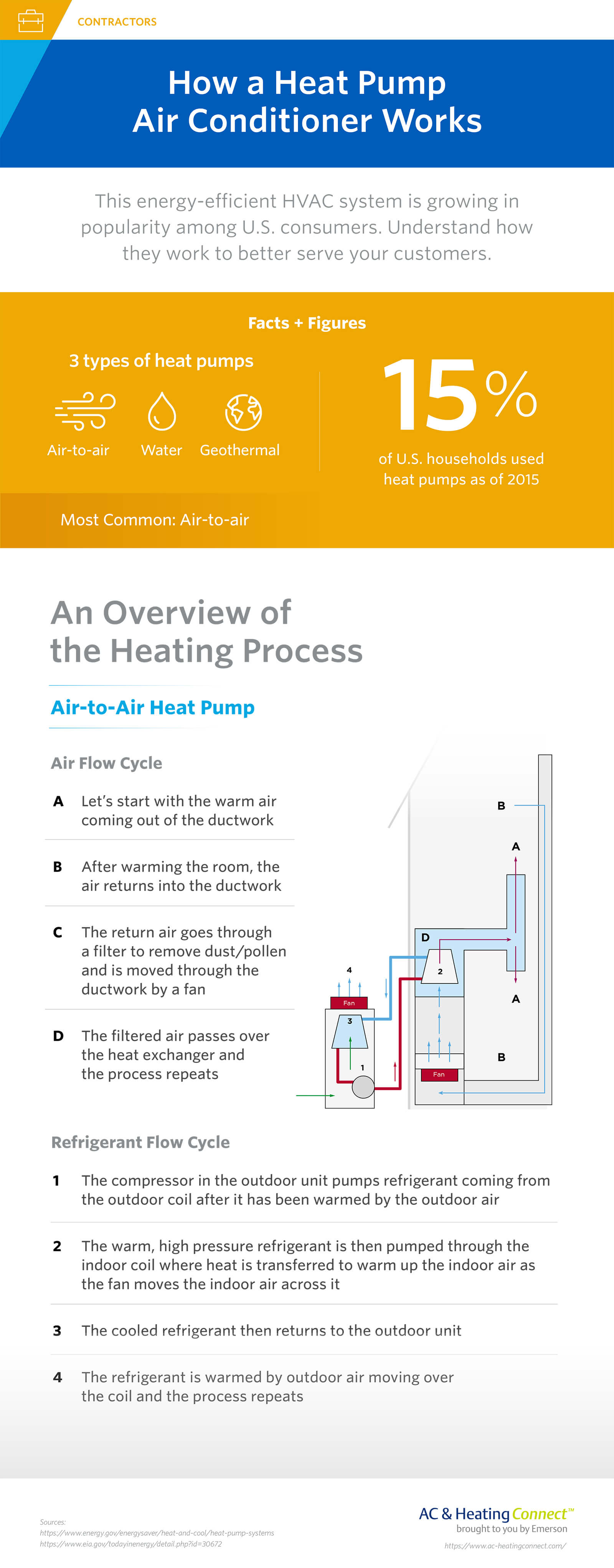
People sometimes ask what is a heat pump and how they work. Heat pumps are simply central air conditioners that provide cooling in the summer and heating in the winter. According to the U.S. Energy Information Administration, roughly 12.1 million households use heat pump systems to heat and cool their homes. Most of them are located in hot-humid or mixed-humid areas with mild winters, where heat pumps work best.
Although only about 10 percent of U.S. households use heat pumps, the number is growing fast as new builders opt for a more energy-efficient system. It’s important for HVAC contractors to learn and understand how they work, especially as they become more popular.
Here’s a basic overview that will help you better understand how a heat pump works:
In order to troubleshoot the components of a heat pump system, you must first understand them. Since much of North America has transitioned into the heating season, it’s perfect timing to review a component commonly found in residential heat pump systems: the suction accumulator.
Air-source heat pumps must maintain a delicate balance and proper control of liquid refrigerant under low ambient heating conditions to adequately provide cooling to the compressor, and avoid excessive refrigerant floodback. If liquid refrigerant is allowed to flood through the system and return to the compressor without being evaporated, it can cause damage to the compressor. Depending on the type of compressor, this damage could range from liquid slugging, loss of oil (in the compressor), or bearing washout.
To protect against floodbacks on systems vulnerable to liquid refrigerant damage such as heat pumps, the accumulator’s function is to intercept the liquid refrigerant before it can reach the compressor. When a coil defrost is required, the compressor is exposed to sudden surges of liquid that can create extreme stresses in the system. The accumulator can act as a receiver during the heating and defrost cycles when system imbalance or an overcharge from field service could result in excessive liquid refrigerant in the system.
The accumulator can store the refrigerant until needed and feed it back to the compressor at an acceptable rate. Major movements of refrigerant take place at the initiation and termination of a defrost cycle, and while it is not necessary or even desirable to stop this movement, it is essential that the rate at which the liquid refrigerant is fed back to the compressor be controlled. Along with this proper metering, the accumulator can effectively maintain the crankcase or bottom shell temperature at acceptable limits. A properly designed suction accumulator can provide excellent protection against both potential hazards and an increase in heat pump efficiency.
What type or size of accumulator should be used?
This component should be located in the compressor suction line between the evaporator and the compressor. It needs to have a volume/capacity large enough to hold the maximum amount of liquid that might return to it, and must have provisions for a positive return of oil to the compressor.
The actual refrigerant holding capacity needed for a given accumulator is governed by the requirements of the particular application, and the accumulator should be selected to hold the maximum liquid floodback anticipated. Typical accumulators manufactured for air conditioning or commercial usage have oil return orifices in size from .0625 to .125 inch diameter. The smaller orifice undoubtedly is more vulnerable to restriction from solder particles or other foreign material in the system, and an inlet screen would be advisable, particularly on systems with field-installed piping. Care should also be taken to prevent solder and flux from entering the accumulator, since excessive foreign material could plug the metering orifice, effectively trapping the compressor oil in the accumulator.
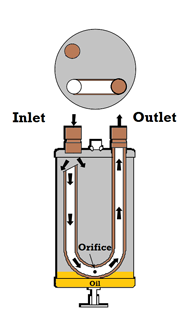
Note the refrigerant inlet is offset from the top of the J tube. As the refrigerant and oil enter the vessel, velocity separation takes place and the refrigerant expands due to the ambient temperature providing a heat source. At this point, the oil entering, (along with any liquid refrigerant) separates from the vapor refrigerant and falls to the bottom. The vapor refrigerant moves through the “J” tube as the compressor causes a pressure difference on between the inlet and outlet of the accumulator. As the refrigerant travels through the “J” tube, this causes a Venturi effect to take place across the orifice, drawing in oil from the bottom of the vessel. The vapor refrigerant carries the oil back to the compressor at a controlled rate.
Across the country, closed schools and offices have many families spending more time together in their homes, making home comfort a greater priority.
With concerns about the spread of the coronavirus, homeowners are looking for ways to keep their families safe. Here are a few tips for home comfort and safety during this challenging time.
Home Comfort & Safety
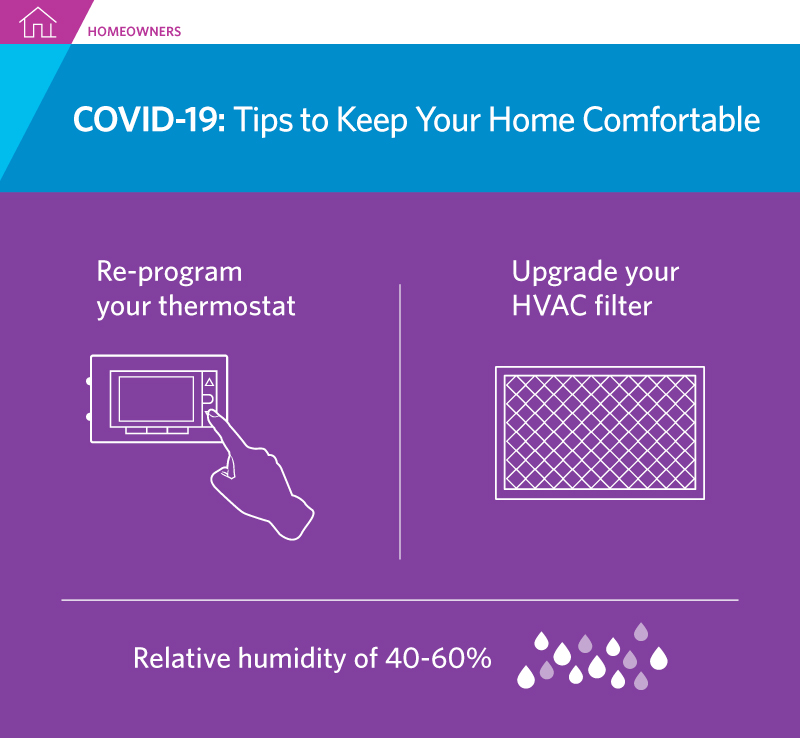
Time to re-program your thermostats. If your family is spending more time at home, your thermostat may need to be adjusted to a more comfortable temperature during the day. If you have a smart Wi-Fi thermostat, this is as easy as using the app on your phone. If not, this may be the time to research options to upgrade your thermostats.
Upgrade your HVAC filter. Look for a filter with a higher value MERV rating, which equates to finer filtration, meaning fewer dust particles and other airborne contaminants can pass through the filter. HVAC experts do caution that a filter cannot guarantee safety against the spread of a virus and note that the air quality benefits only occur when the fan on your system is running.
Look at your home’s humidity levels. HVAC experts say homes and businesses should aim for relative humidity of 40-60%, because viruses are least viable in that range. A well-maintained home humidifier that keeps your relative humidity at the recommended level is a good idea.
Calling a Contractor
Most HVAC contractors are small businesses and they are doing what they can to offer their services safely under the guidelines set by state and local governments.
If you need to call a contractor to service your HVAC system, here are some precautions contractors have shared that they are taking during this time.
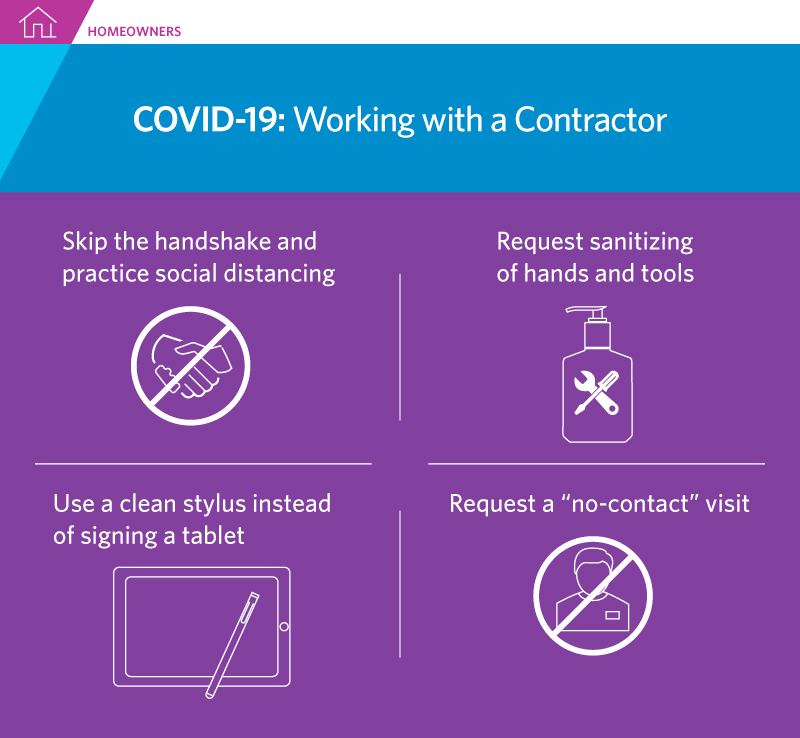
Contractors are taking precautions like using social distancing during their own team meetings. They are washing frequently and sanitizing their hands. If you call a contractor to your home, feel free to ask them to wash or sanitize their hands and their tools before they work on your system.
Many contractors use tablets to record their work and manage their billing. You should use a stylus on any contractor tablet or ask that they sanitize the screen before touching it.
Some contractors are offering “no-contact” visits, where the HVAC system issue is shared with a phone call and even photos. The homeowner stays in another part of the home while work is completed. If this option appeals to you, be sure you ask your contractor about it.
Skip the handshake. Contractors understand that keeping their teams and their customers safe is a top priority.
Since staying safe and keeping your family comfortable are top priorities, the HVAC industry will continue to work to ensure that products and services are available to support businesses and homeowners.
Sources on the HVAC industry response to COVID-19:
As HVAC contractors, we are tasked with keeping staff and customers safe during the outbreak and we are relied upon to provide some guidance to customers about how to protect themselves against the virus in the air.
For employers and employees looking to navigate the new FMLA / FFRCA legislation we put together a document that covers the main points plus we included the federal poster on the topic here.
At HVAC School, we’ve been doing a lot of reading and listening to people with a lot more knowledge on these topics than we have before writing this guide. Even after all the best research, we can muster it must be said that we are not microbiologists, epidemiologists or industrial hygienists. Our understanding of this outbreak is ever-evolving, and we will update this guide as new information becomes available but the best resource for general information regarding prevention and care is available at the CDC website.
As with many things in our trade, it is helpful to gain a simple mental picture of how things work even if it isn’t a perfect representation.
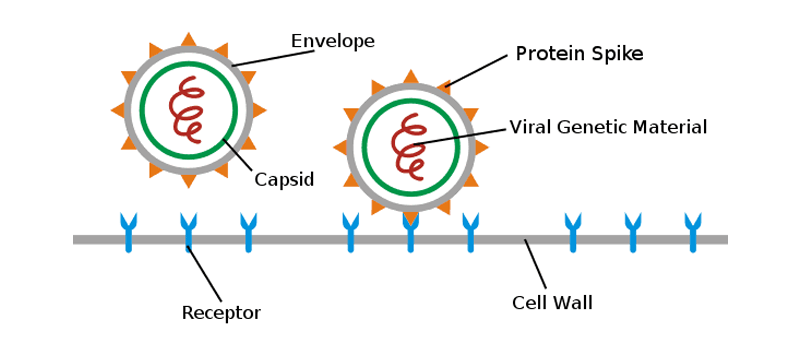
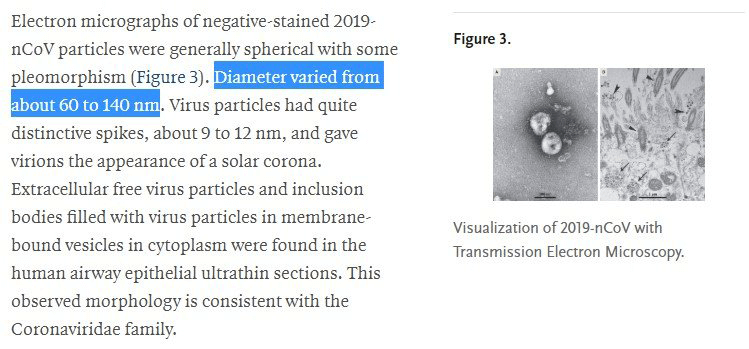
The virus isn’t “alive” in the way that fungus or bacteria is alive, it is a spiky sphere that contains genetic information (in the case of SARS-CoV-2 it is all RNA) that causes the host cells to “make” more of the virus.
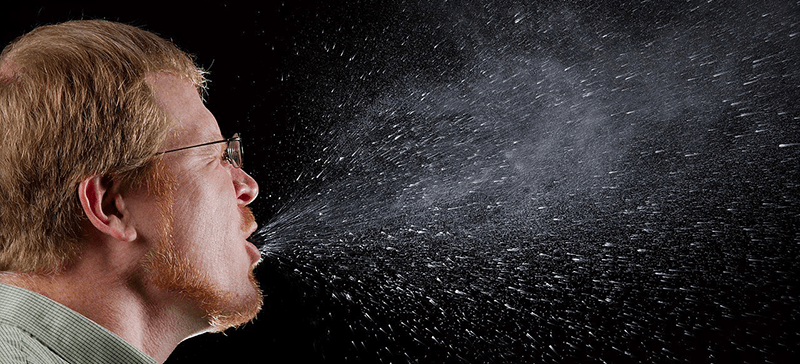
When we ingest or inhale the SARS-CoV-2 virus it attaches itself to our cells and “injects” that genetic information into our cells causing them to create more virus that infects more cells with new spiky spheres. Some of these get expelled from our mouth and nose when we cough or sneeze or talk and some of it makes it onto our hands and we touch things.
The key thing to get our heads around is
The virus spreads outside of us but it only GROWS inside of us
We are the virus factories; our own cells make it based on the tiny plans planted in them. This matter because if we think of viruses like bacteria or fungus that are living and do grow then we will come to incorrect conclusions.
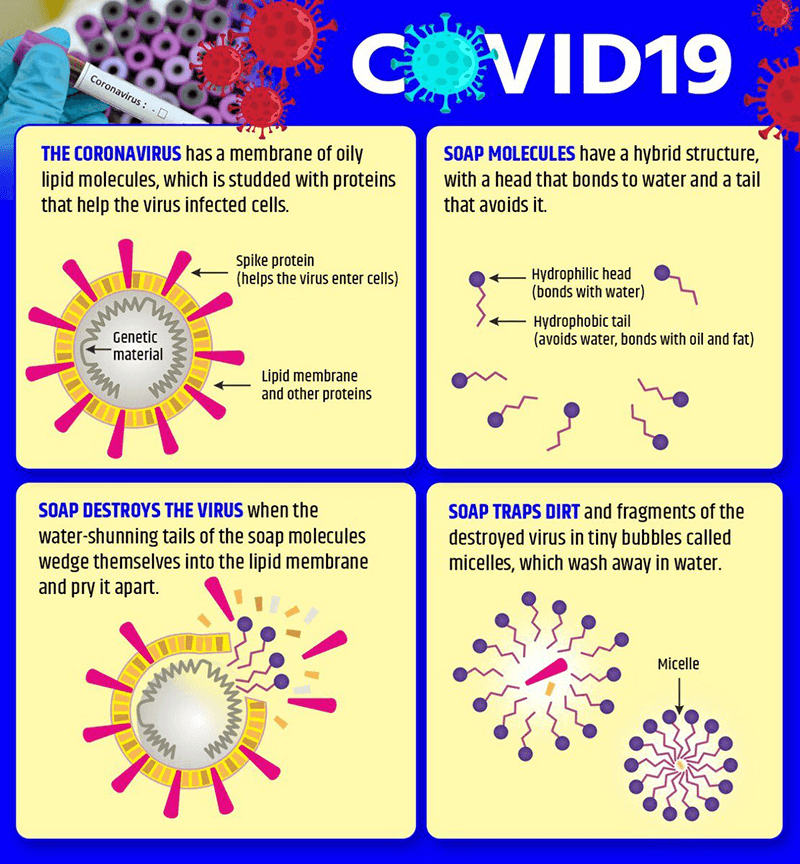
Viruses have a fatty (lipid) coating that makes up the sphere and the spikes that make it stick are little proteins.
When the fatty layer of protection is broken, the genetic information inside the virus can no longer get into your cells rendering it non-infectious. In fact, when we say that something “kills” a virus that is what we are really saying because it wasn’t alive to start with.
One big factor in infection is the immune function of the person who gets the virus. If someone has immunity it means that their immune system has identified the virus as a risk due to current or previous experience and the body sends antibodies to surround and neutralize the virus.
A vaccine is generally a weakened or deactivated version of a virus injected into a person so their immune system can “learn” to fight the virus before an actual infection occurs.
As professionals that interface with consumer health, it needs to be our mission to help provide an indoor atmosphere that promotes immune function as well as protects against contaminants.
This means we seek not only to neutralize viruses but that we look to contribute to all the factors that can make the air indoor healthier. This includes:
Good air ventilation and circulation to reduce airborne chemicals (VOCs) and CO2
Humidity control
Temperature control
Air filtration
Carbon Monoxide Monitoring and testing to keep it as close to zero as we can
Control over duct and building envelope leakage to keep control over indoor air factors and quality
This webinar video from Nate Adams and Retrotec is an excellent source of detailed information and is also one of the resources I used heavily in writing this.
Use Soap / Detergents
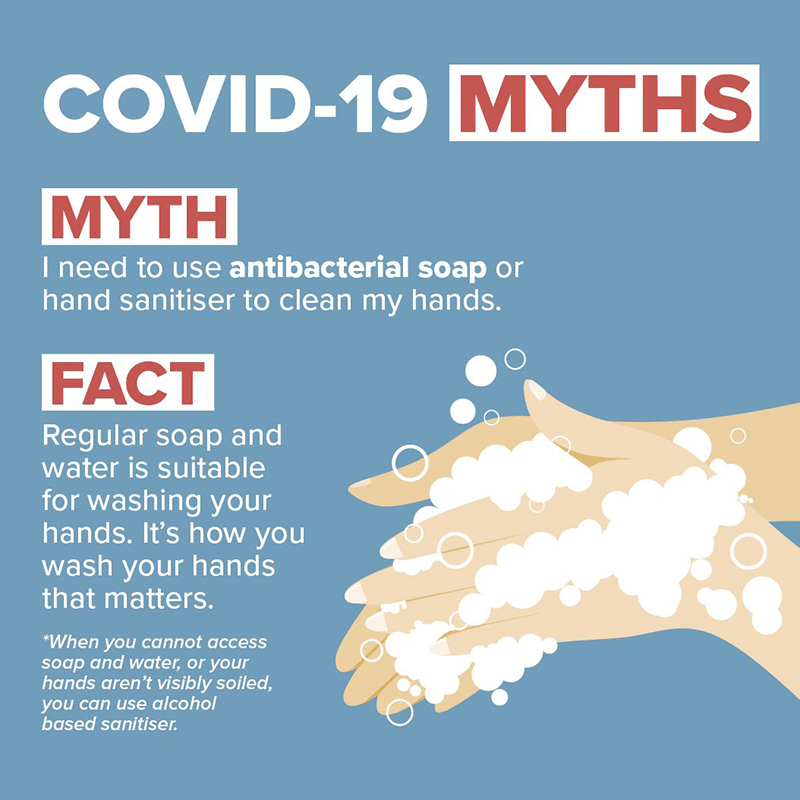
The reason soap works well to deactivate this virus is the soap bond with the fatty lipid shell on this virus and breaks it apart when hands are washed with soap and friction. The “antibacterial” properties of some soaps are just that, antibacterial which means they work against bacteria not necessarily viruses.
The difference between a soap and a detergent is that soap is natural and made from animal and plant sources and detergents are synthetic and are generally specifically designed to overcome some technical challenges with soaps.
A molecular biologist I spoke to summed it up this way:
“Basically, if it makes suds, it’s doing what you need”
Obviously, the effectiveness of any cleaning process depends on many things like the amount of soap used, dwell time and friction.
This isn’t to say that using an anti-viral disinfectant AFTER cleaning is a bad idea. Some surfaces can be tough to reliably clean with soap and disinfectants can also disrupt and deactivate the viral membrane. Make sure to use an EPA Listed Disinfectant that is also specifically listed and labeled for HVAC use.
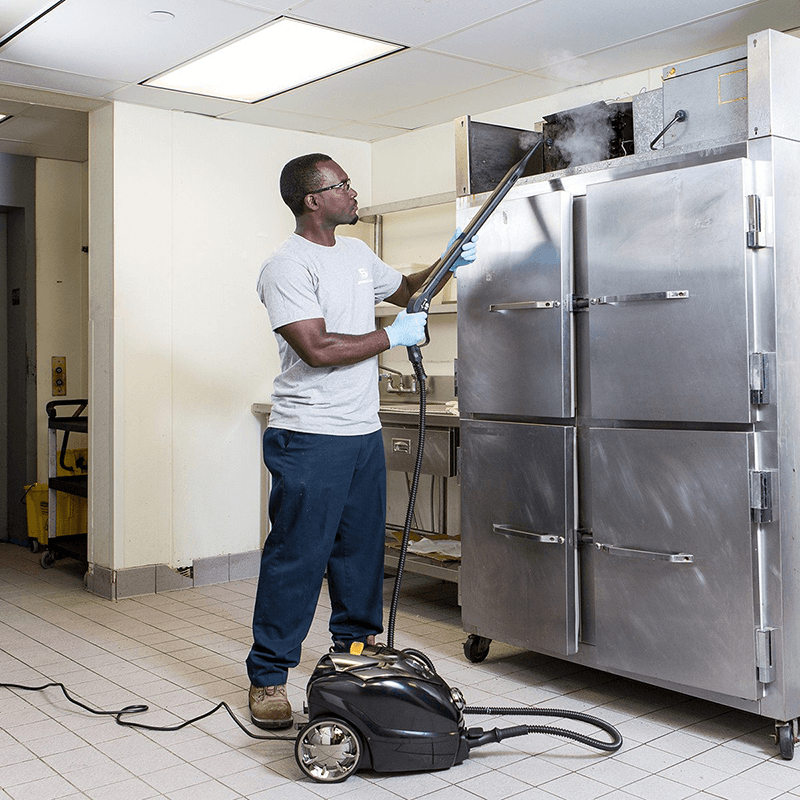
There is evidence that high-temperature steam is also effective as a sanitizer. This is a quote from the EPA Green Cleaning and Disinfection Guide:
“Dry vapor steam cleaners have been shown to be very effective for disinfecting and is approved for food contact surfaces as well as other surfaces.”
As always, we strike a balance between safety and effectiveness and look to use products that are effective and safe when neutralizing viruses and we need to consider the technician and the occupants in our decision making.
How Do We “Catch” (become infected with) a Virus?
There are several different ways that a virus is transmitted but the Coronavirus (SARS-CoV-2) is transmitted primarily in two ways:
Bio-aerosols, basically viruses contained in our saliva that come from our coughs, sneezes, and breath which appear to make up the majority of the risk.
Surface contamination, which occurs when someone gets viruses on their hands and then touches a surface and then someone else comes along and touches that same surface. Surfaces can also become contaminated when bio-aerosols fall and settle on surfaces.
The virus survives best inside our bodies and once it leaves the time starts ticking as to how long it survives before it becomes deactivated and non-infectious.
Again, the virus doesn’t “grow” outside of us, it just spreads out and some other unlucky person can either breathe it in or pick it up from surfaces and transfer it to the face from their hands.
This is why handwashing, disposable gloves (regularly changed), and masks are effective at preventing the spread. In the USA we have not widely used respirator masks such as the N95, primarily because they are cumbersome and uncomfortable to wear all the time and most of all because there is a shortage for healthcare workers.
Wearing surgical masks may not effectively protect the wearer but can assist in containing the bioaerosols in the mask preventing others from being infected by the wearer. This is somewhat disputed by well-researched with the conclusion being that almost any mask is better than no mask.
Either way, we know that quality masks like N95 are the best bet but that we need to save them for healthcare workers at this time.
Health care workers are at a much higher risk of contracting the virus due to procedures such as intubation which is why respirators are a necessity for them and not necessarily for other workers outside of healthcare like HVAC techs.
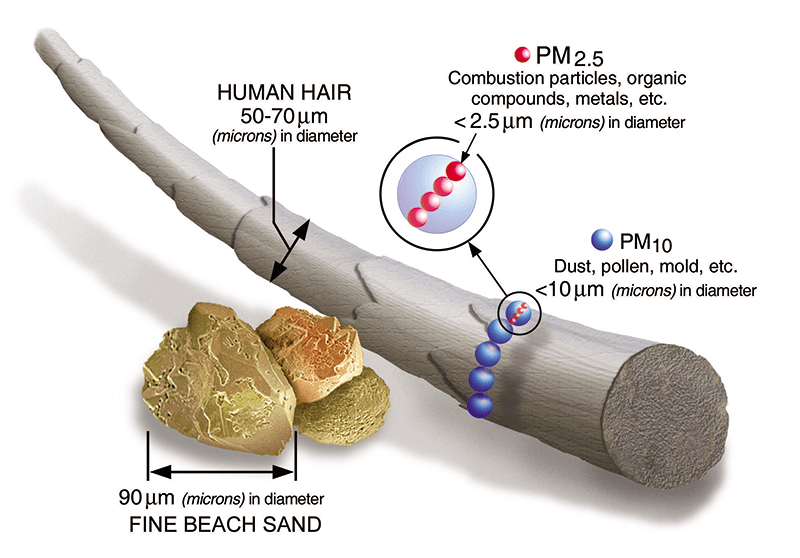
Viruses are small… much smaller than dust, pollen, dander, bacteria, and fungus. This means they can remain suspended in the air given the right conditions and are hard to catch in typical air filters but it isn’t as bleak as it may seem.
Obviously HEPA filtration is still the gold standard for the capture of tiny particles but even HEPA captures really tiny particles via a phenomenon called diffusion.
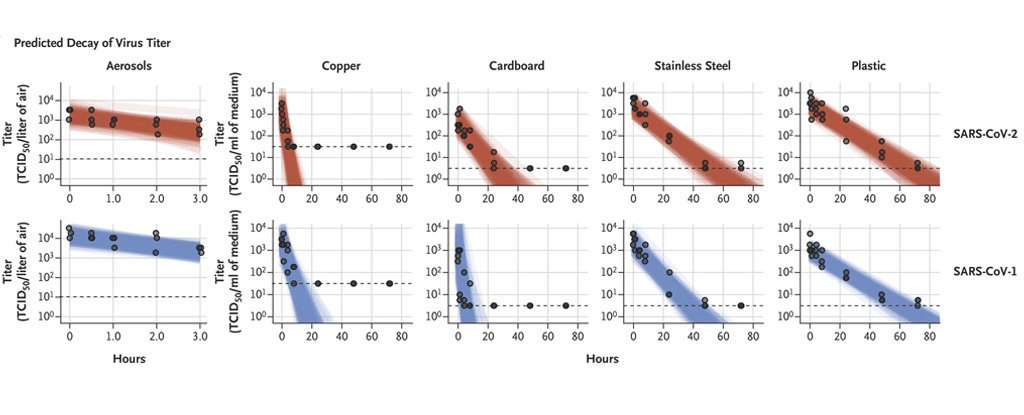
There has been much written and a lot of back and forth on how long this virus can survive in the air and on various surfaces. The answer is, there is still a lot we don’t know but we do know that it can survive in the air but it appears unlikely that an infectious dose will travel all the way into the HVAC equipment and survive long enough to be a risk to HVAC professionals. This doesn’t mean that we shouldn’t take precautions such as wearing gloves, bagging filters and even wearing masks while removing filters but the risks do appear to be low even in worst-case scenarios such as medical HVAC applications.
We know for sure that the virus lasts longer on stainless steel and plastic than it does on copper… So is it time to go back to copper doorknobs and handrails?
Our greatest risk… by far is still when we are around people who carry the virus
So to summarize some virus basics:
Viruses aren’t alive in the same way as bacteria and fungus
People carry the virus and people are where it grows and spreads not on surfaces
Viruses are tiny and hard to catch when compared to most other particulates
Soap and detergent cleaning works well on viruses
Sanitizing with appropriately tested and rated sanitizers is still a good idea
Good masks do help but medical professionals need them most
Protecting Workers and Customers
For an HVAC contractor, it is in our interest as an “essential service provider” to keep our technicians and customers safe while still doing our jobs. The following is a list of policies and procedures you could put into place to help.
Standard Practices
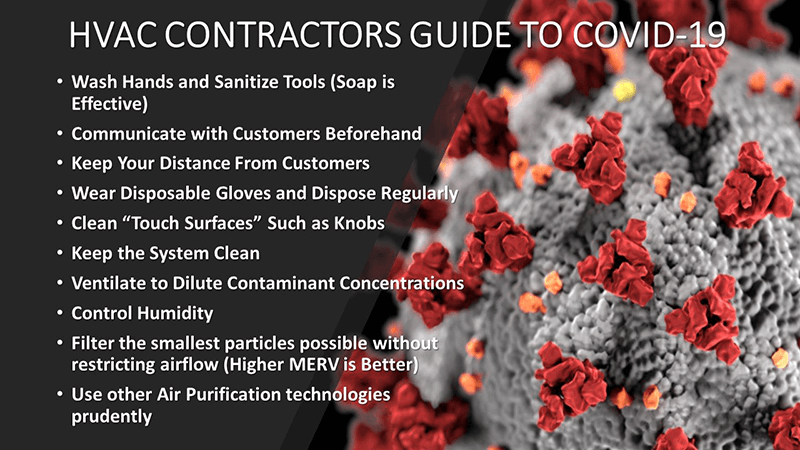
Wash hands thoroughly for 20 seconds with soap and water using vigorous friction
Before Eating
After Each Call
After Bathroom Breaks
After Fueling Vehicle
Employees stay home if they showing any symptoms, make it easy on them to stay home.
Check temperature every morning before the start of work and stay home if it exceeds 100.4° F
Practice distancing of 6’ – no shaking hands
Don’t touch the face
Sanitize tools, steering wheel, and cell phone with 70/30 isopropyl alcohol or other approved sanitizer (Don’t mix products)
Avoid ride-along where possible
Customer Interaction Zones
Ask customers if any occupants have symptoms before dispatching. If so limit to only necessary calls and wear a respirator in the customer interaction zones (when available) and request the customer to wear a surgical mask.
Request all customers to pre-open doors for the technician where possible to limit surface contact and to maintain 6’ distancing
Wear disposable gloves and safety glasses while in the customer work area when handling knobs and surfaces in the customer zone (N95 masks once there is no longer a shortage)
Wear work-appropriate gloves while performing work tasks
Sanitize knobs and other common touch areas at the end of the work
Servicing Equipment
When servicing equipment use usual PPE of gloves, safety glasses or goggles as appropriate for the task and standard PPE masks/respirators when changing filters or working with chemicals.
Service filters and evaporators with the blower off
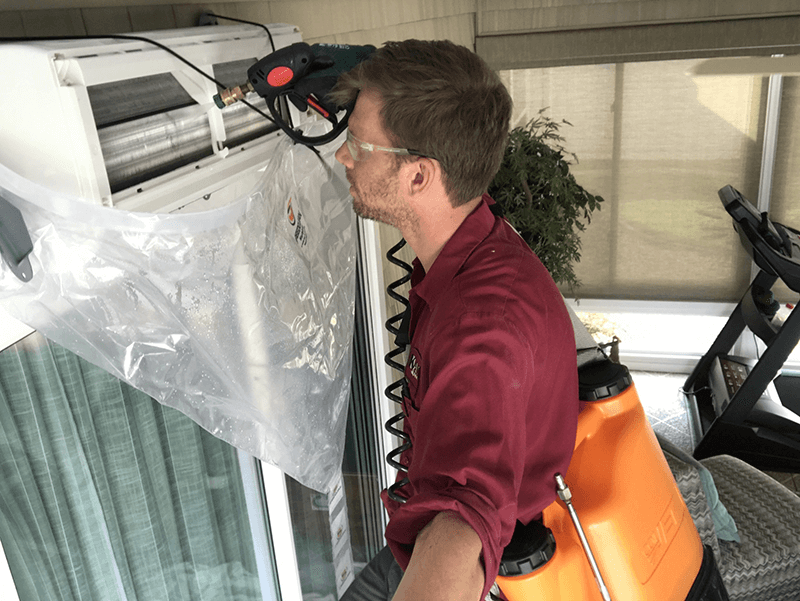
Use only approved cleaning and disinfection products, and follow the specific direction for use for HVAC equipment on coils, blowers, and air filters.
Washing then sanitizing evaporator coils, blower wheels, and cabinets with approved cleaners and processes is always a good idea anyway.
Remember – the greatest risk of infection if when you are in proximity to other people not in the equipment itself.
Improving Customer Outcomes
Another thing our customers look to us for is ways to help protect themselves and their families from infection. Along the way, we need to make sure we:
Do no harm
Tell the truth
Provide solutions that represent a value
Execute the solutions properly
This is surprisingly hard in the case of this virus because it isn’t living, and it propagates inside people not on surfaces or in equipment.
Factors
More indoor time by occupants means more indoor pollution and exposure
Maintaining healthy indoor conditions improves immune and respiratory function (citation needed)
More surface sanitizing means more chemical use indoors and more ventilation and dilution needs
Filtration is required for particles such as dander, dust mites, pollens and dilution is required for VOCs and CO2
CO monitoring is a must for building with any fuel-burning appliances due to the impacts on the pulmonary function of even low levels of CO.
Ventilation
There are many different ways to bring in outdoor air but as we do so, we need to filter and humidity control that air if it’s too humid or dry. It does really help to dilute indoor contaminants with outdoor air so long as we:
Provide filtered, humidity-controlled outdoor air according to ASHRAE 62.2 or similar (dehumidification or humidification may prove challenging at high ventilation rates)
Ventilate during occupancy or according to CO2 / VOC levels
C02 levels higher than 1000 PPM are attributed to decreased cognitive function and perception
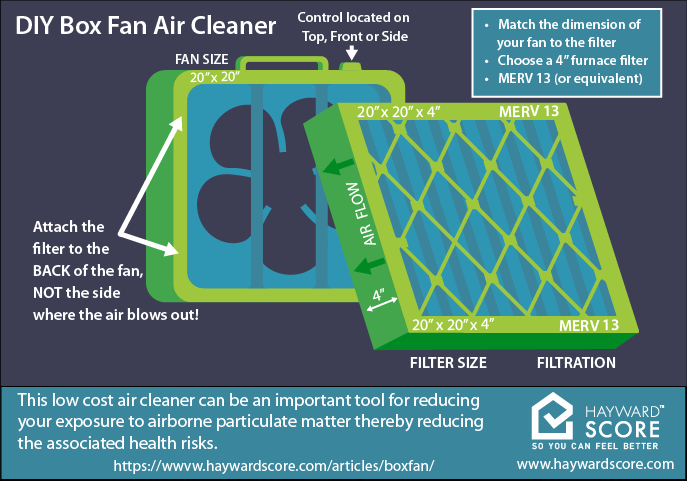
I love this guidance for a simple way to filter rooms air on a low budget from the Hayward Score.
Filtration
HEPA filtration where possible
MERV 13+ is ideal with 4” or thicker media
Activated carbon/charcoal filters can help to reduce VOCs and O3
Filter outdoor air independently / redundantly
Ensure system static pressures are within design
Counteract higher resistance air filtration with a greater surface area to reduce filter pressure drops
Humidity Control between 30 – 60% at all times is highly recommended with 30% being ideal for Winter in cold/dry climates and 50% – 55% being ideal for Summer in warm/humid climates
Humidity control also impacts VOC off-gassing, bacteria, fungus and O3
Kaleb Saleeby wrote an excellent overview of these three factors here.
Be Prudent Regarding IAQ Products
There are numerous IAQ products on the market with varying levels of effectiveness and safety. At HVAC School we advocate for more independent testing under real-world conditions testing against a wide range of particles, VOCs and biological contaminants. As it stands products like direct air filtration are well established where products that use active production of oxidizers have not been as well tested in a truly independent fashion.
Because of this I suggest only selling IAQ products where:
You understand the underlying technology, not just the marketing or trade name
You have a grasp on all of the risks (all products have risks)
You ensure the products are installed properly
The customer has been communicated with based on the science and real research
Avoid falling for:
The idea that any core IAQ technology on the market is proprietary
Claims of kill rates or capture rates without the specific test criteria
Claims that things are “NASA technology” or “Space approved” etc… without understanding what that means
Risks to Watch For
Every IAQ product has some risk factors even if they are minor. For example, putting in a better air filter from a MERV standpoint can restrict airflow, bringing in more outdoor air could increase or decrease humidity beyond the safe range, etc.
Even some of our favorite IAQ solutions can cause problems if we don’t plan for them and think them through. Here are some common things to watch for in common “boxed” purification solutions:
Products that produce O3
UV
UV has been shown effective in irradiating metal surfaces in close proximity (citation)
Any UV light that shines on a surface that is not metal where VOCs can be produced
General information (as of 21-Mar-2020): Most places in the US are not able to test everyone who has the symptoms of COVID-19. So it is most likely that if an employee becomes sick with COVID-19 symptoms, you will not have test results to confirm if they are positive or negative. Most likely, they will be evaluated and if their symptoms are close, they will be given instructions to act as if they are COVID-19 positive. They will be “presumed COVID-19 positive”.
(Managers and Owners) What to do if an employee has had contact with or lives with someone who is sick or “presumed COVID-19 positive”
Contacts of Asymptomatic People Exposed to COVID-19: CDC does not recommend testing, symptom monitoring or special management for people exposed to asymptomatic people with potential exposures to SARS-CoV-2 (such as in a household), i.e., “contacts of contacts;” these people are not considered exposed to SARS-CoV-2.
In closing, this guide is written to help contractors and technicians work more safely and keep customers safe. It is not the final word on any of these topics and should not be used without FIRST reading current CDC and OSHA guidelines as well as consulting an experienced industrial hygienist.
The HVAC industry has been doing service the same way for decades. But today, your HVAC contractor can install sensors on your AC and heating system for monitoring and remote diagnostics. This means smart maintenance is the future of HVAC service.
If your contractor is offering smart HVAC maintenance to give you confidence in their work and peace of mind about your AC and heating system, there are a few things your contractor may want you to know.
Think about smart HVAC maintenance like the check engine light in your vehicle and the way automotive technicians can run a system check to identify maintenance issues for your car. With sensors on the HVAC system monitoring performance 24/7, you and your HVAC contractor can be alerted to issues and help protect against system failure.
Many traditional maintenance offerings don’t bring peace of mind. With today’s technology, your contractor can now offer detailed, customized information on your system.
More than 40% of newly installed residential HVAC systems are not installed correctly, per the EPA. Smart maintenance helps drive accurate installs and repairs. By running performance checks, your contractor can confirm their work while reducing callbacks and increasing productivity. Diagnostics from smart sensors can confirm and solve system errors, helping your contractor perform with confidence on site.
When you have smart HVAC sensors installed, your contractor can analyze your system’s problems remotely to “know before they go.” By analyzing sensor data, they can grab the right part and send the right tech for the job at your house.
Offering you a new system featuring sensor technology and the ability to diagnose problems remotely means your contractor is the right partner for a homeowner who is expecting their home appliances to be smart.
HVAC is a big investment and smart maintenance provides peace of mind and better service experience.
Joe Samel is the head of Marketing Commercialization for Sensi Predict, Emerson’s new smart maintenance solution. Learn more at SensiPredict.com.
Hydrofluorocarbon (HFC) refrigerants are the current choice for most of the U.S. air conditioning industry and for a good reason. Many of the HFC refrigerants used today are non-ozone depleting, non-flammable, recyclable and energy-efficient. While HFCs have good environmental properties and promote energy efficiency, many are now also considered to be global warming gases due to their relatively high Global Warming Potential (GWP).
The Environmental Protection Agency (EPA) began regulating HFC refrigerants in 2015 with the introduction of the Significant New Alternatives Policy (SNAP). Since then, the industry has made significant progress in identifying the next generation of low-GWP refrigerants. However, the events of the past two years leave the timing of the transition uncertain.
U.S. Court Vacates SNAP Rule 20
In August 2017, the U.S. Court of Appeals for the D.C. Circuit ruled to vacate EPA SNAP Rule 20. Responding to a challenge submitted by two refrigerant manufacturers, the court ruled that the EPA had exceeded its authority to require the replacement of HFCs under Section 612 of the Clean Air Act.
The decision was based on the reasoning that Section 612 was created to curb substances containing higher ozone depletion potential, not to address the matter of greenhouse gases and their associated GWPs. The decision was appealed to the Supreme Court, who declined to consider the case.
In response to SNAP Rule 20 being vacated, the EPA has stated that it will no longer enforce refrigerant delisting and will roll back other HFC-related regulations. In particular, the EPA will exclude HFCs from the leak repair and maintenance requirements for stationary refrigeration equipment, otherwise known as Section 608 of the CAA .
The updated rule, which had been in effect since 2016, lowered the leak rate threshold in supermarket refrigeration systems from 35 percent to 20 percent and set forth specific requirements pertaining to HFC management. With the rescinding of this rule, refrigeration equipment with 50 pounds or more of HFC refrigerant would no longer be subject to these requirements.
Even if the leak repair and maintenance requirements of Section 608 is no longer enforced for HFC systems, an effective leak repair and maintenance program is still generally recognized as an industry best practice. Other beneficial provisions of Section 608 — including the certified technician program and the refrigerant recovery and reclamation rules — are still in effect.
There is currently no mechanism in place for the EPA to regulate refrigerants based upon GWP. The U.S. has not yet ratified the 2016 Kigali Amendment to the Montreal Protocol, a global treaty created to phase out harmful greenhouse gases and ozone-depleting substances, thus leaving us with no federal solution. One option is to pass federal legislation giving the EPA the authority to regulate HFCs. A federal bill has now been proposed.
The American Innovation and Manufacturing Act of 2019
The AIM Act of 2019 (S. 2754) was introduced in the Senate by Senators John Kennedy and Tom Carper in October 2019. As of January 1, 2020 there were 32 co-sponsors, divided equally Republican and Democrat. If passed, this bill would authorize the EPA to regulate HFCs and specify production and consumption limits over 15 years. This bill is not tied to the Clean Air Act and would not preempt states from implementing their own phase down schedule. Multiple HVACR industry associations have signed a letter in support of the AIM Act recognizing the potential economic and consumer benefits. A similar bill has now been introduced in the House.
California Air Resources Board (CARB) HFC phase down
With federal efforts to regulate HFCs stalled in 2017, the California Senate directed the California Air Resources Board (CARB) to preserve the original framework outlined in EPA Rules 20 and 21. CARBs proposal also calls for more aggressive phase-down measures in line with the EU’s fluorinated greenhouse gases (F-gases) efforts.
The first CARB proposal preserved the federal framework in new retail food refrigeration, food dispensing equipment, refrigerated vending machines, chillers, and foams.
The second proposal calls for future rules on refrigerant use according to their GWP and refrigerant charge in specific applications. Under these guidelines:
Refrigerants with a GWP of 750 or more would be prohibited in chillers beginning in 2024.
Refrigerants with a GWP of 750 or more would be prohibited in new stationary air-conditioning systems beginning in 2023.
Approved by the board, CARBs Rulemaking 1 proposals to adopt SNAP Rules 20/21 entered effect in 2019. Draft regulation regarding CARB’s Rulemaking 2 proposals was released in January 2020. If the second rulemaking enters effect, California will be the first state to require the transition to a low GWP refrigerant.
Other States Follow Suit in Adopting SNAP Rules 20 and 21
In response to the U.S. government’s decision to withdraw from the Paris Agreement several governors joined together to form the United States Climate Alliance. The group now consists of 25 members committing to contribute to the global effort to address climate change, specifically upholding the goals of the Paris Agreement and reducing greenhouse gas emissions by at least 26 percent by 2025.
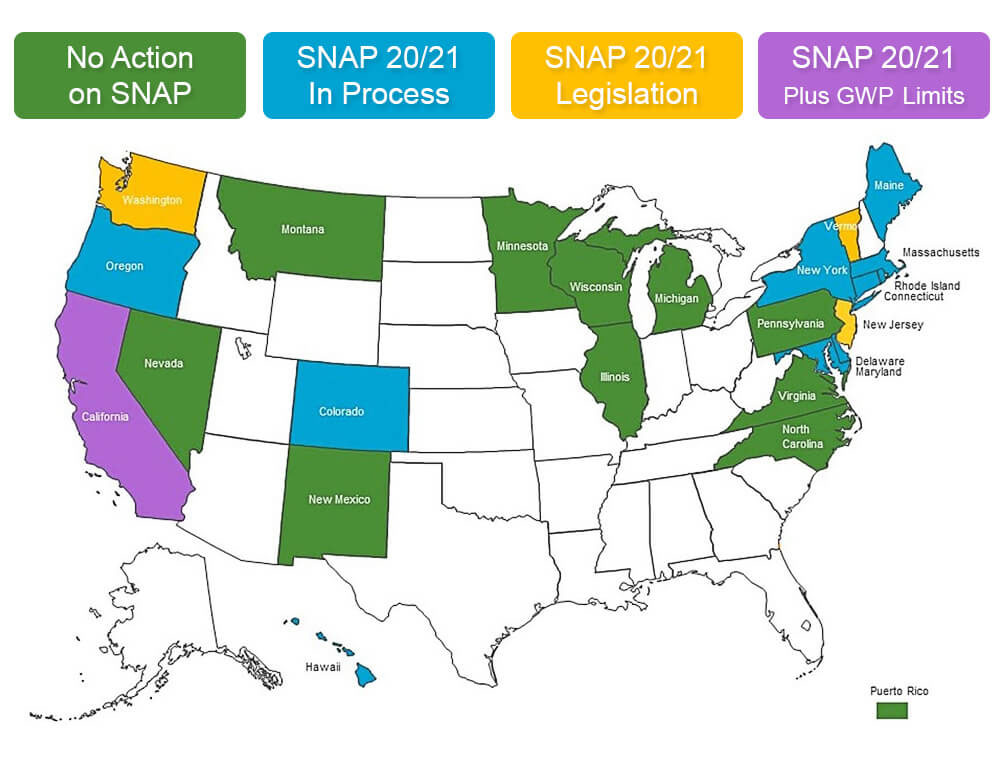
Adopting SNAP Rules 20 and 21 at the state level is one mechanism to achieve that goal. Thus, Washington, Vermont, and New Jersey have also adopted SNAP 20/21 through legislation, with several other states announcing they too would begin to phase out HFCs.
Standards and Codes
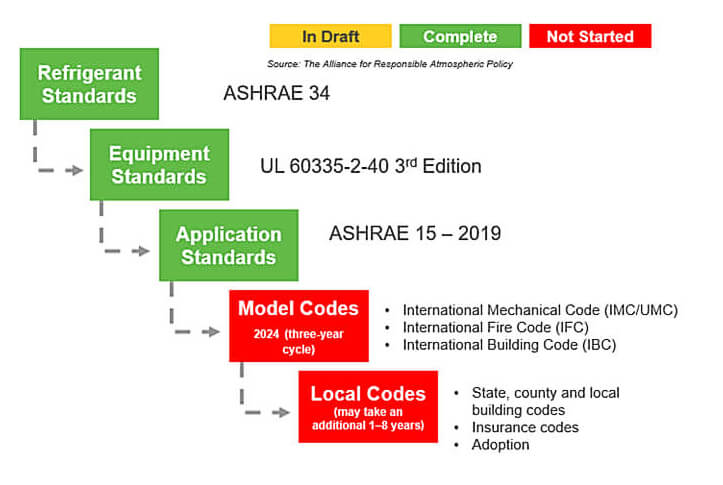
Many of the new low-GWP refrigerants are classified as A2L, or mildly flammable by ASHRAE standard 34. The most recent editions of ASHRAE standard 15 and UL standard 60335-2-40 have been modified to allow the use of A2Ls in residential and commercial HVAC applications. However, model codes have yet to adopt these changes, and the next code cycle is not until 2024.
Building codes vary from state to state and in some cases town to town, and local code adoption to allow the use of flammable refrigerants in comfort cooling may take years to accomplish. However, states wanting to enable the use of lower GWP refrigerants sooner could choose to adopt parts of ASHRAE 15-2019 directly into state building codes and recognize UL 60335-2-40 3rd edition as Washington State has done. Added to the patchwork of regulation above, it is foreseeable that it may be mandatory to use a low-GWP refrigerant in one state but illegal due to building codes in another neighboring state. Contractors will be left to educate the homeowner on the requirements and potential cost implications.
Factoring Energy into the Regulatory Equation
HFC Refrigerants are only one factor in the regulatory equation. The HVACR industry is also dealing with energy mandates from the Department of Energy (DOE). Both residential and commercial air conditioning and heat pump sectors will see new energy efficiency regulations effective January 1, 2023. These efficiency increases will need to be met with both the existing refrigerant and the new low GWP refrigerant, leading to a larger testing burden than is typically experienced during a refrigerant or efficiency transition.
As a Contractor, What Does This Mean to Me?
Refrigerant regulations are coming – the question is when and how, and that depends on the state(s) in which you do business. The combination of state by state HFC regulation and building code adoption could lead to a proliferation of refrigerants as some states begin restricting HFC refrigerants, while neighboring states/localities remain status quo. It will be important to stay up to date with your state and local building codes and HFC regulations to ensure you are compliant.
The contents of this article are presented for informational purposes only, and the contents are not intended to be a substitute for legal advice. Emerson Climate Technologies, Inc. or its affiliates (collectively “Emerson”) has made every attempt to ensure the accuracy and reliability of the information provided in this article. However, the information in the article is provided “as is” without warranty of any kind. Emerson does not accept any responsibility or liability for the accuracy, content, completeness, legality, or reliability of the information contained in this article.
Many homeowners decide to install heat pumps because of their high efficiency and reliability. It’s important to maintain your system in order to get the most out of your heat pump.
Maximizing The Efficiency of Your Heat Pump
Proper Thermostat Adjustments
When you adjust the thermostat during the winter months, don’t make big jumps upward or downward in the temperature setting. Sudden upward adjustments can activate the backup heater, which is inefficient. Remember that heat pumps circulate air that will feel relatively cool coming out of the vent, but actually warm enough to heat the house efficiently. Unlike a gas furnace, which blasts hot air for a few minutes and then turns off, heat pumps actually run longer, but are more cost-effective.
Temperature Settings at Night
Further, setting the temperature back at night is not necessary for heat pumps with two-stage thermostats. That is because turning the heat back up in the morning could activate the backup resistance heater, which would wipe out any energy savings from turning it down overnight. If you want to turn the temperature down at night for comfortable sleeping, slowly raise the setting a few degrees at a time in the morning and check the thermostat light to make sure backup heating has not been activated.
Proper Thermostat Pairing
Make sure that your thermostat is properly paired with your heat pump. Most “smart thermostats” are also designed to work with common heat pump configurations. They also support several stages of heating and cooling and can run the heat pump and auxiliary heat simultaneously to maximize comfort and reduce overall energy costs. Some systems are equipped with an outdoor temperature sensor, which is used by the logic to determine when supplemental heating is needed, even if the room thermostat is suddenly turned up.
Maintenance and Air Filter Care
As a homeowner, remember to check the system air filters every month for dirt and dust, and clean or replace them as recommended. These air filters are very important to the system operating correctly, especially in homes with pets.
Normal Operation and Defrost Cycle
Outdoor coils should also be cleaned with water regularly and checked to make sure that airflow around the unit is not obstructed by plants, mulch, garbage cans or snow. Cleaning on the coils should only take place during warmer days, which may mean preparing in the fall season. If ice forms on the outside coil of a heat pump during the winter season, know that this is completely normal, and no action needs to be taken. To melt the ice, the heat pump has a defrost cycle, which should turn on automatically and melts the ice in less than 10 minutes. When this happens, steam might rise from the outdoor unit, which is also a normal part of the defrost cycle. Overall, maintaining good airflow both inside and outside will extend the life of your unit. The heat pump should be serviced periodically, before the start of the heating season. If you notice a drastic increase in your electric bill due to the heat pump, it may be time to contact a professional.
Follow these simple tips to make sure your heat pump is reliable during the heating season.






 Originally published on