The HVAC Contractor’s Role in Disaster Recovery

Hurricanes Harvey, Irma and Maria caused major devastation in parts of Texas, Florida, and other southeastern coastal states. Homeowners and business owners are beginning the cleanup and rebuilding process. Many will seek out help from trusted contractors for repairs, particularly to air conditioning and heating equipment. HVAC contractors and technicians play an important role in the disaster recovery process, providing a comfort that many of us take for granted.

HVAC contractors are the experts, educators

In the midst of disaster recovery, the role of an HVAC contractor is to provide technical expertise. You will also be educating homeowners and business owners about the risks that flooded equipment presents. HVAC contractors should take the lead in facilitating conversations with customers on whether to repair or replace existing heating and cooling systems.

Conversations with your customers

Nathan Walker, senior vice president of Houston-based Goodman Mfg. Co, recently provided tips for HVAC contractors in the middle of disaster recovery efforts, including:

  • Balance the business opportunities that natural disasters create with the humanitarian side of the crisis. Don’t lose sight of the fact that people are suffering greatly. By operating with the well-being of your customers in mind, you will build goodwill for your business for the long term.
  • Start with your customer base. You’ll be able to work off of your records to provide superior customer service and technical expertise.
  • Educate customers on the types of problems that can result from flooded equipment. Your credibility will increase if they understand why replacing damaged HVAC equipment is necessary.

If you’re a contractor, there are many resources available to help you have a conversation with your customers about whether to repair or replace flood-damaged HVAC equipment. Share these helpful tips with your customers today.
Commercial Rooftop Air Conditioners: When to Repair or Replace

Rooftop AC Units (RTUs) serve 70 percent of the cooled commercial floor space in North America, which equates to nearly 40 billion square feet. To make this possible, rooftop air conditioners consume more energy than any other type of cooling technology – 4.3 quads each year, which is the equivalent of 34 billion gallons of gasoline.

So why are they so common? Their small footprint and lightweight design reduce the impact on roof construction and structural support, and they effectively perform the basics of heating, cooling, and ventilation.

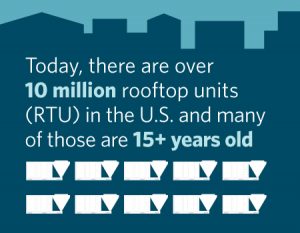
10 Million Rooftop Air Conditioners are 15+ Years Old

Although they are effective, older RTUs operate at lower efficiency levels and commonly have operational issues. Below are some key areas to consider when deciding whether to repair, upgrade, or replace your system.

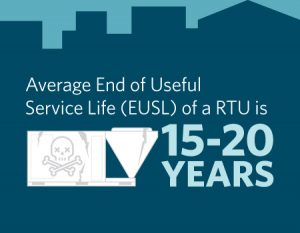
Average End of Useful Life is 15-20 Years

Excessive Energy Usage

  • Over-sized equipment
  • Constant volume fan operation
  • Limited part-load operation
  • Code minimum energy efficiency
  • Lack of advanced features

Operational Issues

  • Service deficiencies
  • Deferred maintenance
  • Improper set points
  • Duct leakage
  • Inability to adapt to changes in building load realities

Destruction of capital

  • Ineffective preventative maintenance
  • Unnecessary energy expenditure
  • Costly preventable repairs
  • Short-term results from recommissioning efforts
  • Expensive premature replacement programs

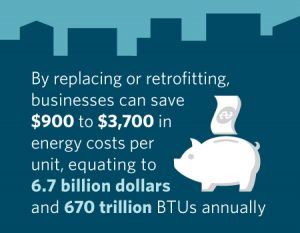
Retrofitting or Replacing Old Rooftop Air Conditioners can Save $6.7 Billion or 670 Trillion BTUs Annually

While there are ways to improve upon your current situation, costs can add up quickly. Many building owners and facility managers choose to avoid spending money repairing these old rooftop air conditioners, and take the opportunity to invest in new equipment. With the new systems, you are getting something that has increased efficiency, is more durable, and has more service-friendly features.

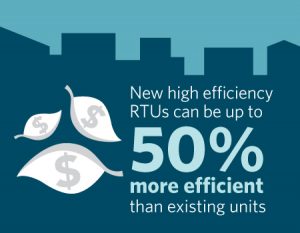
High-Efficiency RTUs can be up to 50% More Efficient

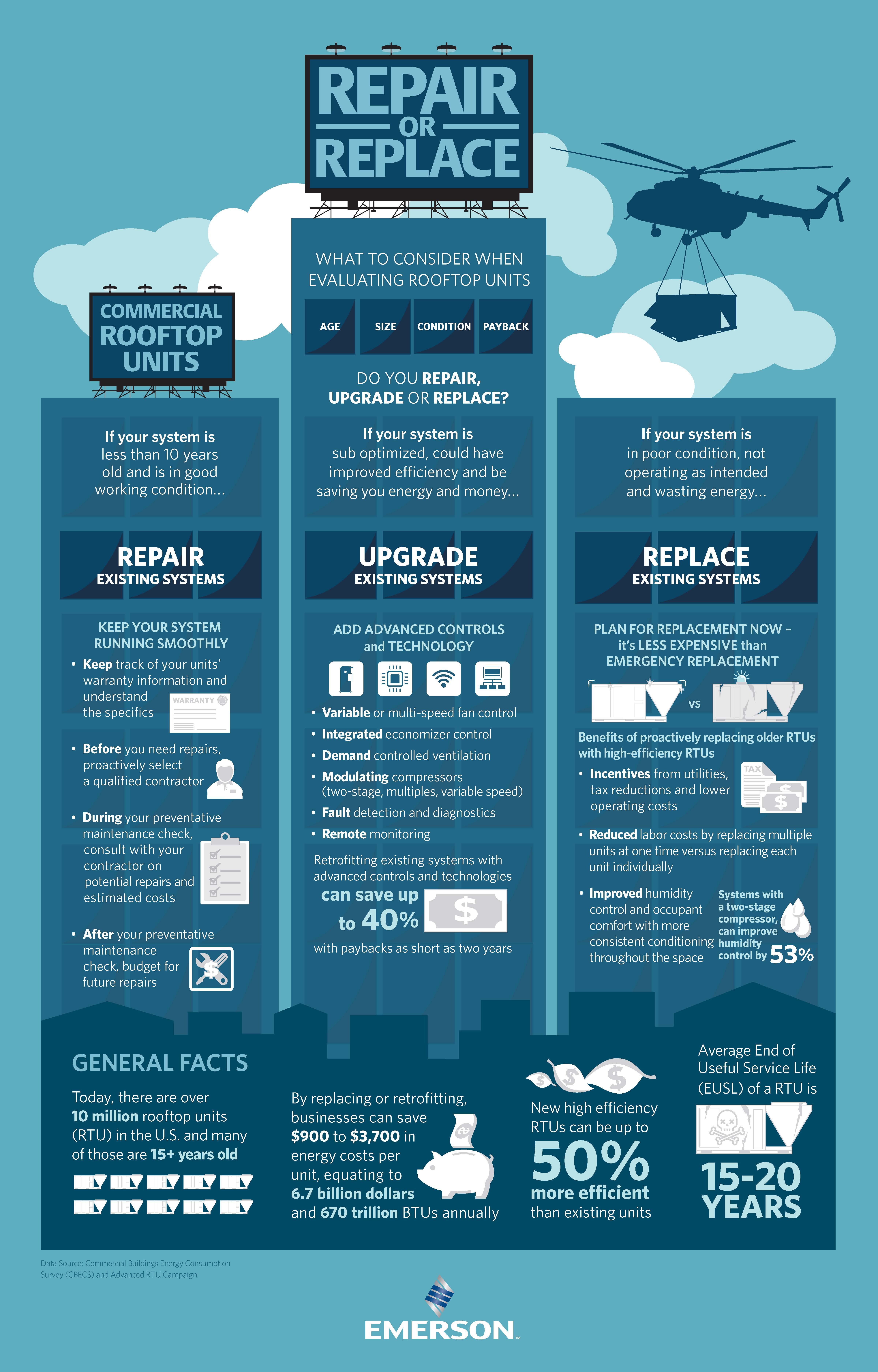
Whatever the choice may be, it’s important to do what is best depending on the situation and circumstances. To assist in making this decision, check out this helpful infographic.

Infographic: Repair or Replace Commercial Rooftop AC

Play it Safe: Replace Flood-Damaged HVAC Equipment

Hurricanes Harvey, Irma and Maria have caused major devastation in parts of Texas, Florida, and other southeastern coastal states. As flood waters recede, homeowners and business owners will begin the cleanup and rebuilding process. And that means dealing with flood-damaged HVAC equipment.

When it comes to air conditioning and heating equipment, the Air-Conditioning, Heating, and Refrigeration Institute (AHRI) president Stephen Yurek advises those affected to “play it safe and replace, rather than repair, flood-damaged heating, cooling and water heating equipment.”

Tips for homeowners and flood-damaged HVAC equipment

AHRI has published tips on how to properly handle flood-damaged heating and cooling equipment, including:

  • Heat pumps and air conditioning systems
  • Water heating systems
  • Ductwork

Buying, Building or Selling? Know your Home’s HERS Index Score

The Home Energy Rating System – more commonly referred to as the HERS Index – has become the most well-known energy rating system for residential construction builders in the U.S. You can think of it as a “miles per gallon” rating for homes. Let’s look at what the HERS Index is and why builders are adopting it.

What is the HERS Index?

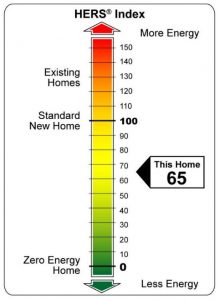
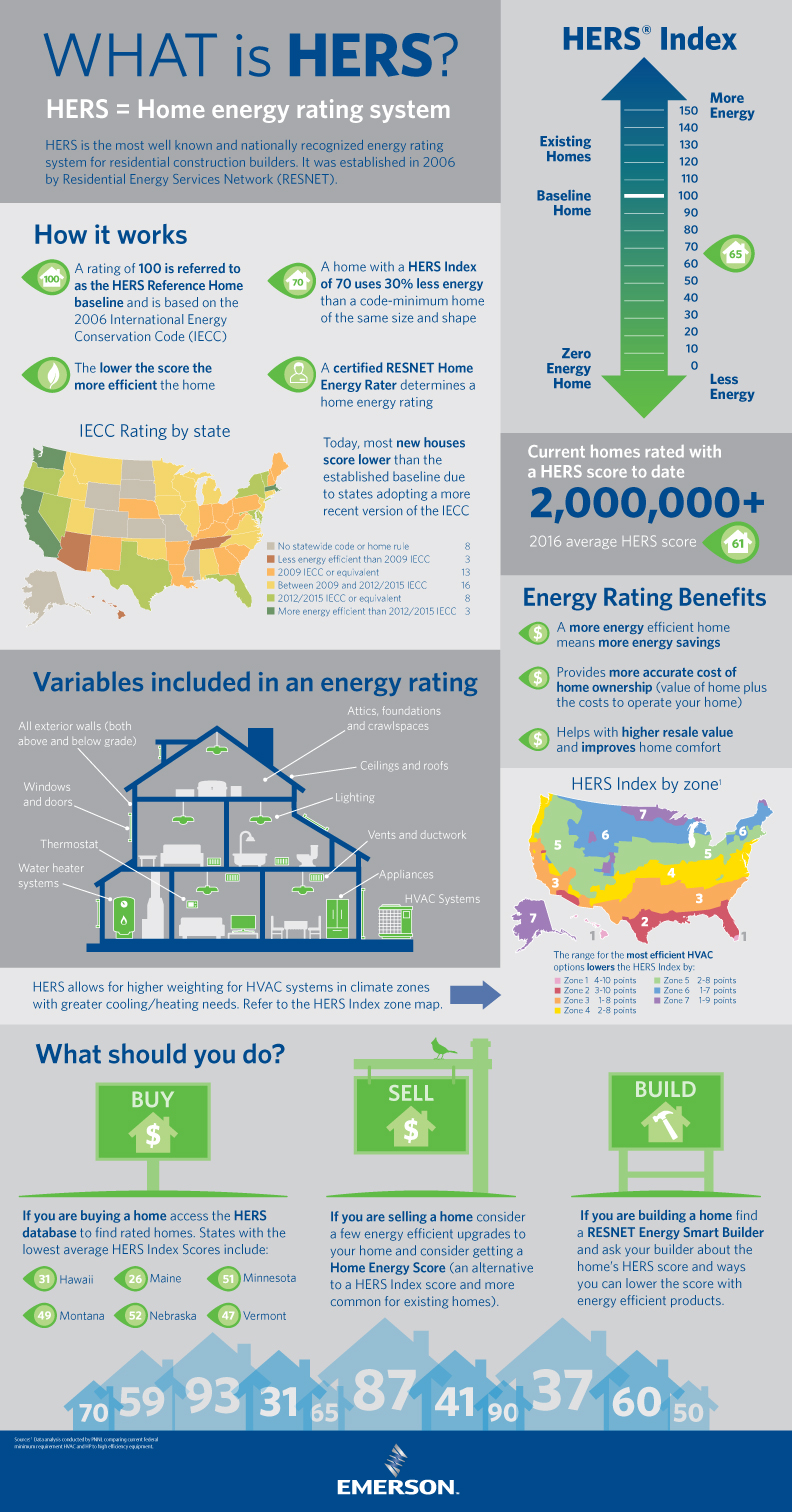
HERS Index (home energy rating system)Developed by the Residential Energy Services Network (RESNET), the HERS Index is a nationally recognized system to rate a home’s energy efficiency, with lower scores indicating a higher efficiency home. A HERS Index of 100 represents the energy efficiency of a standard home built according to the 2006 International Energy Conservation Code (IECC). A HERS Index of zero represents a net-zero energy home. Each value on this scale represents a one percent change in the total energy use of the rated design.

The rating is based on inputs from testing conducted inside the home as well as the efficiency of heating and cooling systems, supply and return air ducting, building envelope air infiltration, and building envelope insulation quality. This tool helps homeowners understand how energy efficient a home is when making a purchase.

What’s Driving Adoption?

The 2015 IECC introduced an Energy Rating Index (ERI) compliance path using the HERS Index. Builders like this approach because it allows them to select the most cost-effective energy efficiency measures for each home. According to RESNET, twelve states have adopted the ERI compliance path into energy codes for new residential construction with an average HERS score requirement of 53.

  • Alabama
  • Florida
  • Illinois
  • Maryland
  • Massachusetts
  • Michigan
  • Nevada
  • New Jersey
  • New York
  • Texas
  • Utah
  • Vermont

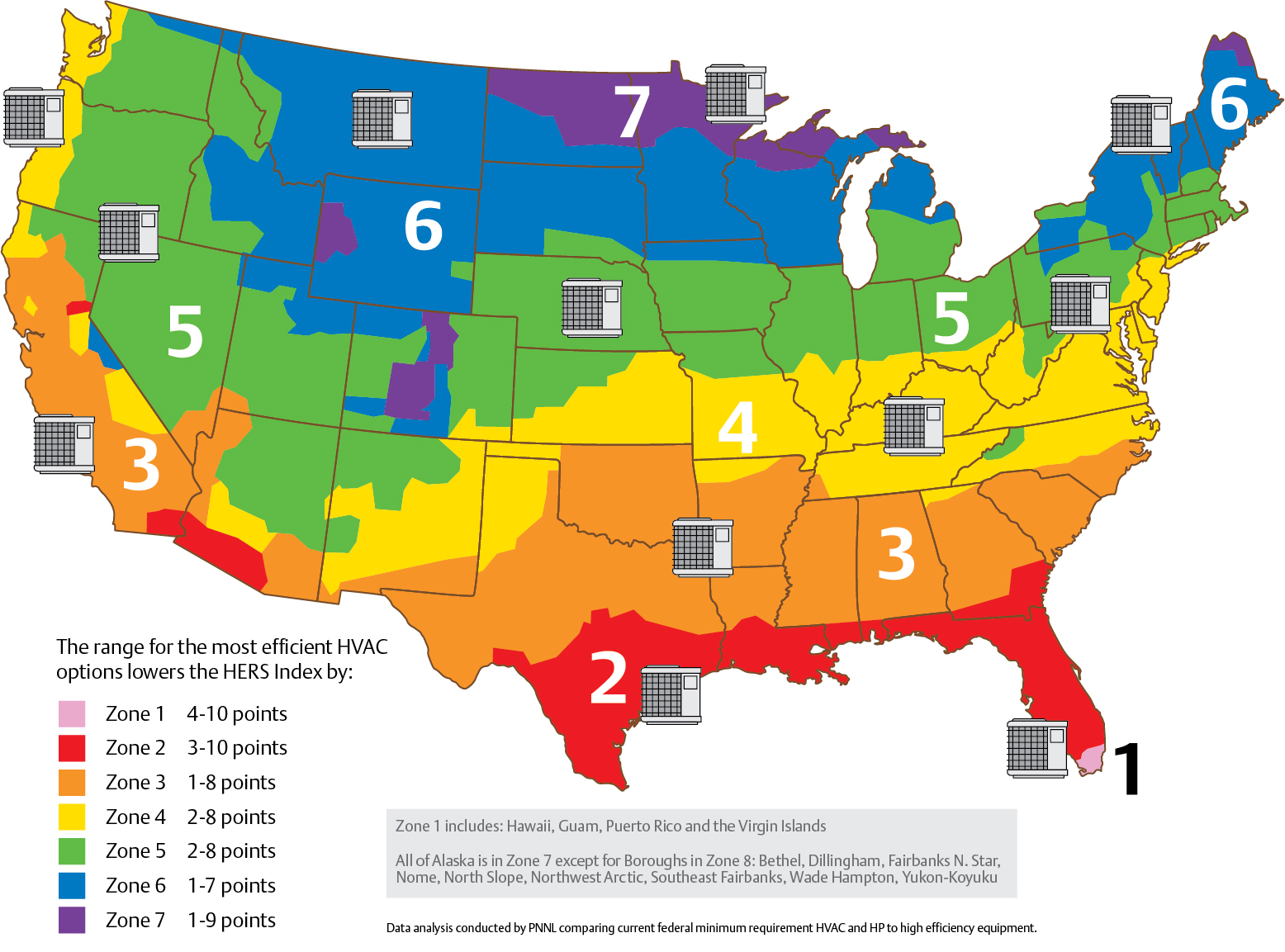
HERS Index (home energy rating system) Zone Map

Utilities have also started offering incentives utilizing the ERI “whole-house” performance pathway to increase energy efficiency in new residential construction. This is a more comprehensive approach to verify that all materials, systems and appliances are working together to maximize a home’s energy efficiency.

22103-hers_infographic_v2

Click here to download the HERS infographic.

How Hotels Can Improve Energy Efficiency with Chillers

Large hotels across the United States spend an average of $1.05 per square foot just on electricity every year. In addition to that, another $0.25 is spent on natural gas. With nearly 60 percent of total energy use in any lodging facility coming from lighting, space heating and water heating, it makes sense to focus on energy savings that could be found in those systems.

heat-recovery-case-study-hotels

Comfort is always a top concern at hotels, but cooling unwanted hot air in warmer months is a tough task requiring a lot of energy. In a study, hotel managers found that instead of paying to reject heat that is generated by cooling, they could recover this heat for use in guest showers, kitchen operations and anywhere else hot water is necessary.

This heat recovery greatly reduces cost, heat waste and energy usage and is made possible by a heat recovery chiller paired with a variable speed compressor and motor control drive. The system has the unique ability to remove heat from either air or water and distribute it wherever necessary. All the system components working together make it possible for the system to direct the refrigerant wherever it is needed without any compressor shutdown.

Increasing Your Home’s Energy Efficiency with Heat-Recovery Chillers

In the United States, the average annual energy expenditure per person is $3,052. In total, heating and cooling account for around 48 percent of all energy consumption per household. This makes chillers and air conditioners the perfect targets for increasing energy savings.

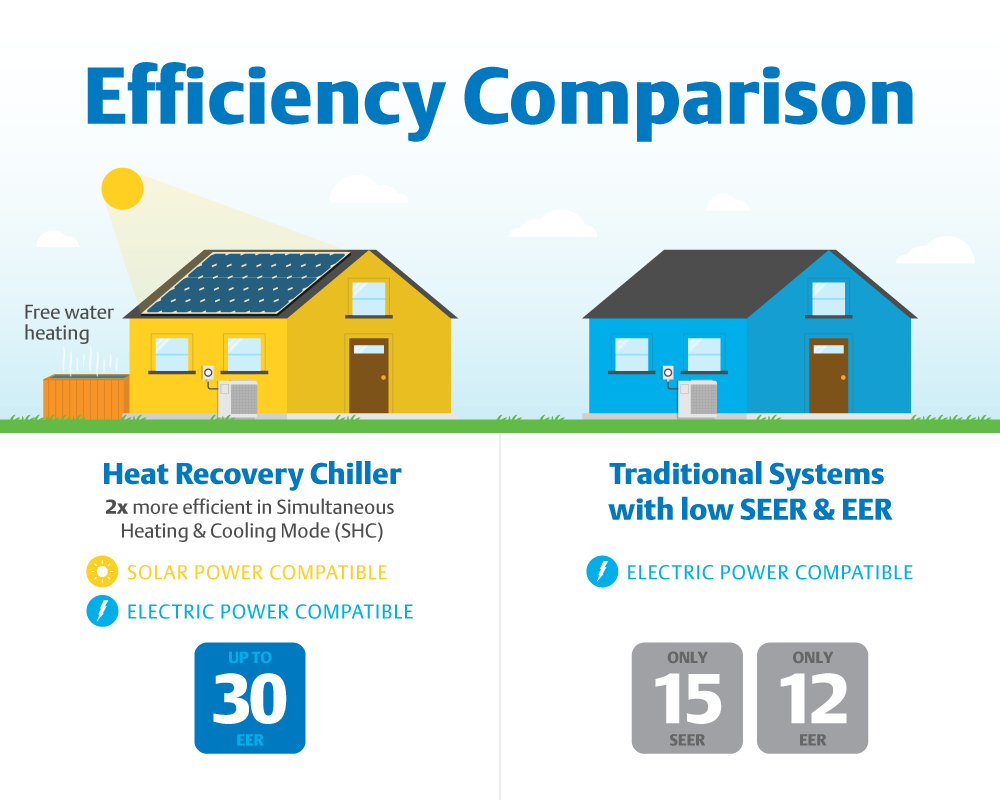
In a study, an innovative heat-recovery chiller was paired with a variable speed compressor and motor control drive to reclaim wasted heat, maximizing energy efficiency ratings (EER). The home featured in the study was equipped with solar panels. This amplified the effectiveness of the compressor-chiller duo and significantly increased the home’s energy efficiency.

heat-recovery-case-study-home

In an average home, a lot of energy is used to cool the air in warmer months, wasting substantial amounts of unwanted hot air. Regardless of the temperature of the home, people still need to heat water for various purposes. Rather than paying to reject heat entering a space by cooling it and then paying for gas as a form of heating, the unwanted heat can be recovered to use in the home for various purposes. This reclaimed heat can provide hot water for the kitchens, bathrooms, pool or hot tubs without using any additional energy to by avoiding gas or electric to heat the water.

The technologies used in this study are an unrivaled pair. The heat recovery chiller is twice as effective as other systems and has the ability to reclaim 100 percent of the heat, which would otherwise be rejected into the atmosphere and wasted. The variable speed compressor’s flexible design is great for unique applications.

Emerging HVAC Trends

Part 3/3 of Why a career in HVAC?

Check out contractor’s perspective on future trends in HVAC and how they are planning on addressing them now and in the upcoming years.

Hosts: Pete Lee, Eric Strausbaugh, and Lindsay Headings.
Guests: 

  • Ben Kelley and Andrew Oser of Cropp Metcalfe Services
  • David Kyle of Trademasters Service Corp.
  • Ted Konechne of L & S Mechanical.

Timestamps:

  • 0:14 – Welcome
  • 0:40 – Trends in technology
  • 6:37 – Defining home performance
  • 9:50 – The future of energy
  • 13:18 – HVAC contractors views on changes in technology
  • 28:31 – Wrap-Up

Young Emerging HVAC Industry Leader – Kevin Dorough

Part 2/3 of Why a career in HVAC?

Copeland meets with Kevin Dorough to discuss how he found his way to the HVAC industry as well as his experiences working through the ranks to create a successful career.

Hosts:

Lindsay Headings, Pete Lee

Guest:

Kevin Dorough

Timestamps:

  • 0:09 – Welcome
  • 1:03 – Who’s Kevin?
  • 4:02 – Learning on the job/training
  • 10:19 – Career advice
  • 15:30 – How to be an everyday leader
  • 19:10 – How to recruit the younger generation
  • 23:07 – Struggles of finding new employees
  • 24:40 – Emerging trends
  • 26:17 – Wrap-Up

Summer is SEERing: Three questions to ask before purchasing a new HVAC

If your AC system fails, do not panic. Grab a glass of ice water and ask yourself these three questions to ensure your next AC system keeps you cool and cost-efficient.

1. Are you SEERing?

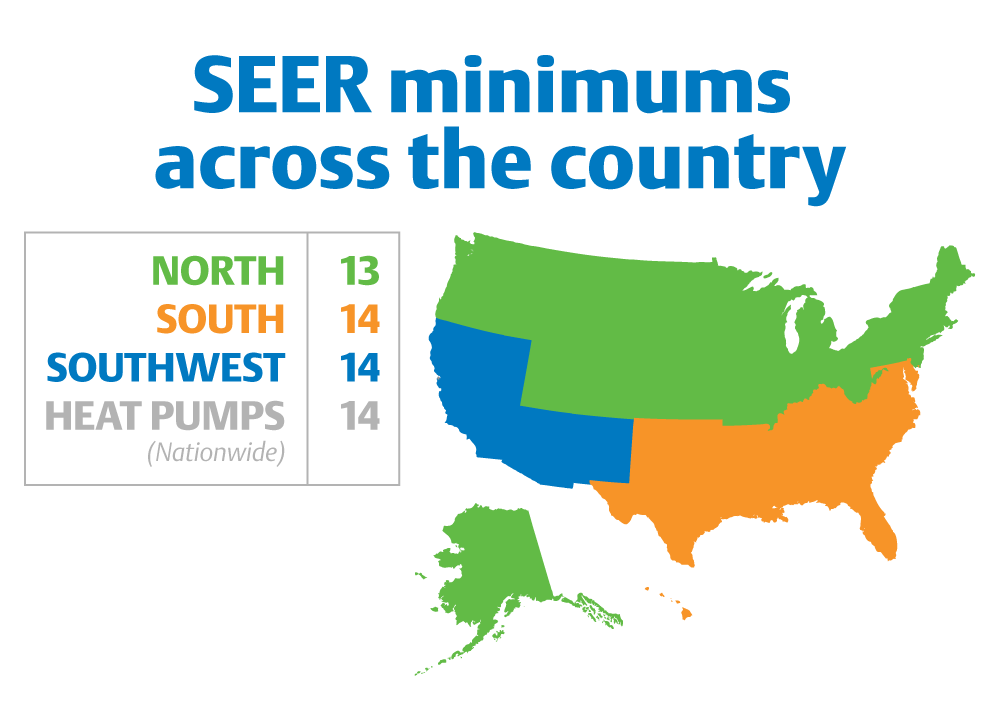
The Seasonable Energy Efficiency Ratio, otherwise known as SEER, tells you how much cooling a system puts out for each unit of energy it consumes over the course of a typical cooling season. Only 14% of homeowners know the SEER rating of their system, but it’s key to choosing the most efficient AC system.

seer-mpg-vs-seer

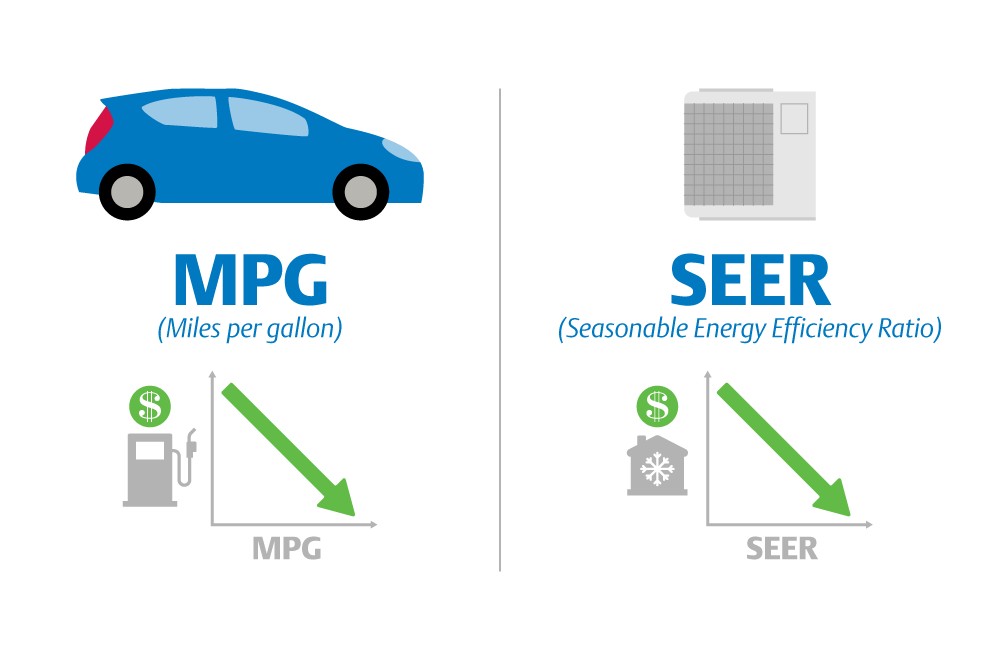
Think of it like your car’s MPG—the better the MPG, the less you have to spend on fuel.

So the higher the SEER, the higher the efficiency… and the higher the efficiency, the higher the savings. Plus, the higher the SEER, the better for the environment and your comfort, especially in the spring and fall.

seer-minimums

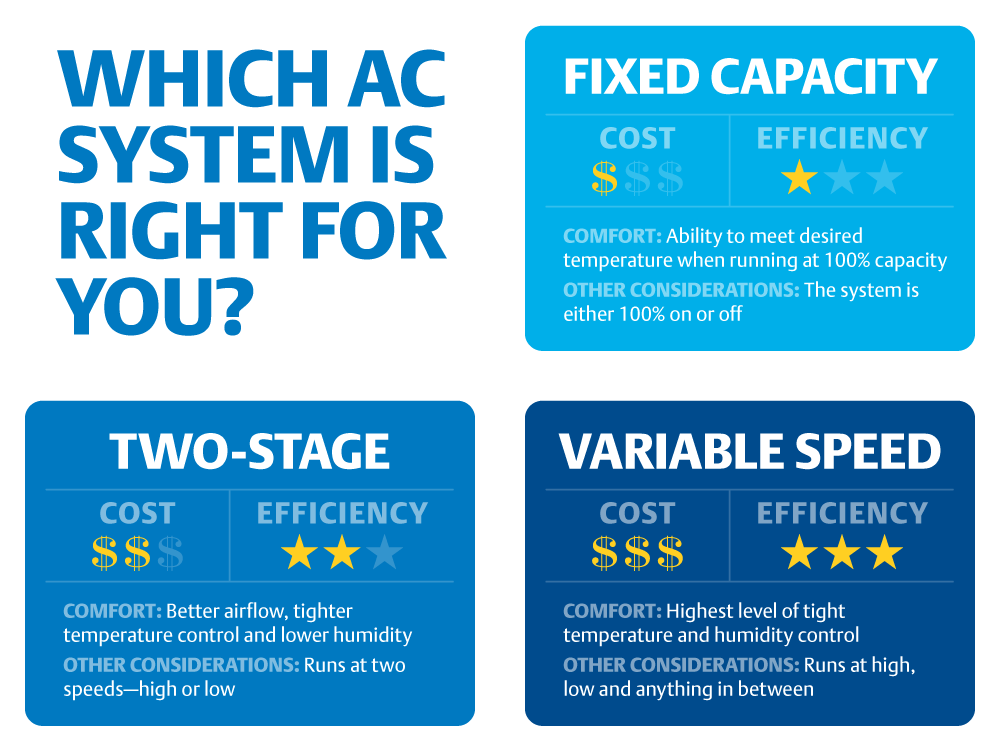
2. Which AC system is right for you?

AC systems last about 16 years before they are replaced (depending on geography and run time). Federal, state or local governments and utility companies offer incentives of direct rebates, tax credits, and tax reductions up to $1,000 per system (depending on your location and type of system).

Your options:

seer-ac-systems

Download this PDF here.

Did you know? A system that turns on and off less frequently costs less to operate.

3. What should you do next?

It’s time to get SEERious about your HVAC!

esaver_residential_app

Download the free Emerson e-Saver app for iPhone or Android to quickly calculate the annual energy cost savings of systems with various SEER ratings.

Why a career in HVAC?

Emerson continues its conversations with prominent contractors. In this episode, we learn about why each of them chose a career in HVAC and hear some of their thoughts on what success looks like and leadership means in the industry.

Hosts:

Pete Lee, Eric Strausbaugh, & Lindsay Headings

Guests:

  • Ben Kelley and  Andrew Oser of Cropp Metcalfe Services
  • David Kyle of Trademasters Service Corp.
  • Ted Konechne of L&S Mechanical

Timestamps:

  • 0:15 – Welcome
  • 0:50 – Why enter and stay in the industry
  • 2:00 – Misconceptions about the HVAC industry
  • 4:33 – Success stories
  • 7:50 – Wrap-Up