Understanding Your AC: An Introduction to SEER and Efficiency

One of the most common questions we are asked is, “As a homeowner, what should I know before purchasing my next central air conditioner?” This is a very important question and with that in mind, we will examine rated efficiency and important considerations to make sure your installed efficiency doesn’t suffer.

What is SEER?

Seasonal Energy Efficiency Ratio (SEER) is the metric used to rate energy efficiency in residential air conditioning. Generally speaking, the higher the SEER rating, the less electricity the system utilizes and the higher the efficiency.

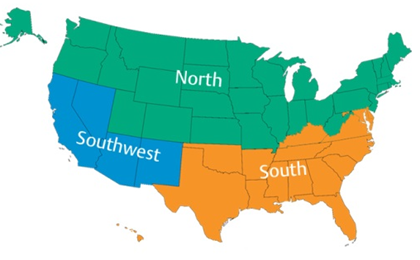
The US Department of Energy regulates this equipment by defining the system test procedure and establishing the federal minimum efficiency levels, setting the lowest tier of equipment allowed to be legally sold in the US. Testing is conducted in a lab to ensure a fair comparison between models. Because air conditioning is used more frequently in the southern US, in 2015 the Department of Energy put into place regional energy efficiency standards. The current SEER minimum for the north is 13 and the south 14.

The next federal minimum efficiency increase is scheduled to take effect January 1, 2023, where minimum SEER will effectively increase 1 SEER point in both the north and the south. The most efficient ducted central air systems for 2019 range from 18-23 SEER.

SEER

But the SEER rating is just part of the overall picture. Installed performance is affected by several other factors external to the equipment design. Some conditions that could negatively impact HVAC performance include, but are not limited to:

  • Improperly matched systems
  • Improper system installation
  • Dirty coils
  • Thermostat or control system location or settings
  • Undersized or leaking ductwork
  • Inadequate level of insulation and non-insulated construction methods
  • Leaking or drafty windows and doors
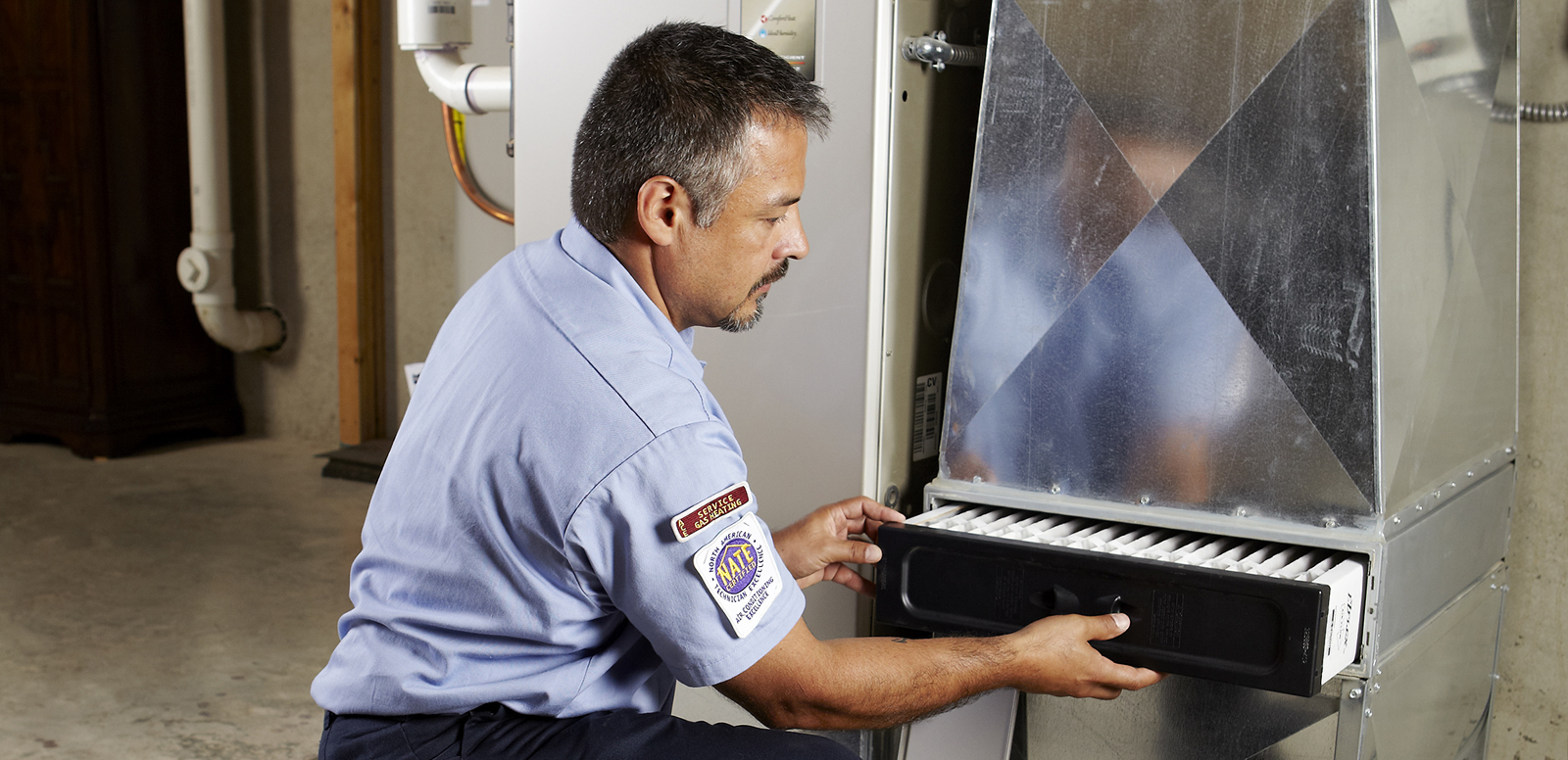
  • Dirty or improperly installed air filters

The next time you look to purchase a new air conditioner, consider using the ACCA Residential Quality HVAC Installation checklist to make sure you are receiving the performance benefits you paid for.

The contents of this article are presented for informational purposes only, and the contents are not intended to be a substitute for legal advice. Emerson Climate Technologies, Inc. or its affiliates (collectively “Emerson”) has made every attempt to ensure the accuracy and reliability of the information provided in this article. However, the information in the article is provided “as is” without warranty of any kind. Emerson does not accept any responsibility or liability for the accuracy, content, completeness, legality, or reliability of the information contained in this article.

The “Modern” HVAC Contracting Firm

In this episode of HVAC on Air, the group discusses the new challenges and opportunities today’s contractor faces and the differences in the industry in the last 10 years as it continues to evolve over time.  These industry experts even touch on the topic of how contractors should consider preparing for the future of the HVAC industry as well. Listen and find out for yourself!

Host: Lindsay Headings, Digital Marketing and Content Manager, Emerson

Guests:

  • Nick Lamb, Butler Heating and Air Conditioning
  • Ed McFarlane, Haller Enterprises, Inc.
  • Austin Haller, Founder of Schedule Engine
  • Tony Trapp, Upper Valley Career Center

Timestamps:

  • 0:10 – Welcome
  • 1:35 – Differences between now v. 10 years ago
  • 10:13 – How to keep students up to date
  • 12:10 – Challenges & the importance of the customer experience
  • 26:00 – How students choose a career path: commercial v. residential
  • 28:35 – Industry regulations & safety
  • 36:21 – Additional comments towards the changes in the industry

Keeping Senior Facility HVAC Systems Running in the Broiling Heat of Summer: 5 Tips

If you’re the owner or facility manager of a building that houses or caters to seniors, you’ve likely watched in alarm as increasingly high summer temperatures have led to your cooling costs steadily increasing.

Global climate change is leading to higher average temperatures throughout the year, while extreme heat bakes region after region during the summers. The recent news headlines say it all:

  • Bay Area sizzles, and there’s more heat on the way (Mercury News)
  • Heat wave fuels ‘crazy heat, even for Mississippi’ and power demand record in Texas (USA Today)
  • Increasing humidity, driven in part by climate change, is making even modest heat waves unbearable (Washington Post)

Extreme summer temperatures are a potentially hazardous situation for seniors. As the National Institutes of Health (NIH) explain, older adults are at significant risk of developing heat-related illnesses like heat stroke, heat edema (swelling in ankles and feet), heat syncope (dizziness brought on by exercising in high temperatures), heat exhaustion and heat cramps. Collectively these illnesses are known as hyperthermia and are just as dangerous for seniors as the more well-known hypothermia.

While anyone can suffer from heat-related illnesses, seniors are especially at risk because their bodies are less able to handle temperature extremes. As we age, our skin and circulatory systems change, leading to decreased blood circulation and inefficient sweat glands. Add in potential heart, lung, kidney or weight issues, and it becomes even more difficult for seniors to handle summer temperatures. Also, the NIH has found that lifestyle factors, such as overdressing, living in hot quarters, or not understanding how to respond to weather conditions, also have a significant impact.

For facility managers who oversee properties that house seniors or other at-risk populations, keeping the HVAC system top of mind and maintenance on track is a must. This checklist can help you keep your residents safe and comfortable, even during the most extreme summer temperatures.

  1. Routine Service & Inspection

Routine visits from your HVAC professional ensure your system runs at peak performance and that potential service issues are found and repaired quickly. A maintenance contract guarantees that your system is checked on a schedule. During visits, your service technician should be conducting visual inspections of assembly systems, along with cleaning and lubricating components. Technicians should also be running diagnostics tests on electrical and mechanical components to determine parts that can be tuned up or may need replacement. Maintenance should be conducted before the cooling season (April or May), in mid-summer to ensure there are no cooling system issues (July or August), ahead of the winter heating season (October or November), and again in winter (January or February) to confirm the heating system is in running optimally.

  1. Program for Performance

A regular, programmed temperature in senior facilities is much more important than it may be in other facilities. Seniors are more sensitive to changes, so keeping temperatures consistent through programming and other facility management practices are important for senior comfort. Additionally, programmed temperature control can significantly reduce your facility’s energy costs.

  1. Facility-Wide Consistency

Set it and forget it? Not at all. To ensure the comfort of your residents and catch problems early, you should be regularly checking on the actual temperature in your facility in multiple zones and rooms. If you’re noticing inconsistencies – cold spots and warm spots that deviate from your thermostat settings – that is a warning sign that something could be wrong in your evaporation and condensing coils, your ductwork or your thermostat.

  1. Air Filters

While dirty air filters are an easy fix, a clogged filter can seriously hamper airflow and performance, leading to larger problems like burnout of critical circulation motors. For senior housing facilities, filter changes will likely be required more often than in more controlled environments, such as a data center or laboratory. Changing filters on a regimented schedule will help to keep your system running in optimal ranges. Consult with your HVAC technician for your facility’s ideal filter replacement schedule.

  1. Your Thermal Envelope – Walls, Windows, Doors, Roof & Floor

While your HVAC system is critical for maintaining the health and safety of your senior residents, remember that it is but a single component of a larger system. Your building’s thermal envelope is not to be overlooked. Sealing cracks, adding insulation and reducing heat gain from windows and doors play a huge role in both the comfort of your facility and the health of your HVAC system. The tighter and more insulated the building envelope, the less work your HVAC system must do.

Recent Survey Reveals Comfort Drives HVAC

Here are Eight Ways to Start a ‘Comfort Conversation’ with your Customers8 ways to start a Comfort Conversation with your Customers

This post is an excerpt from an article by Becky Hoelscher in Contracting Business. To read the full article and learn more about the importance of homeowner comfort through our survey results, click here.

A recent survey* by Emerson found that nearly 40 percent of homeowners admitted to having family disagreements about comfortable temperature in their home. This presents an opportunity for contractors to start a comfort conversation with homeowners about technology and solutions that can help drive comfort and livability.

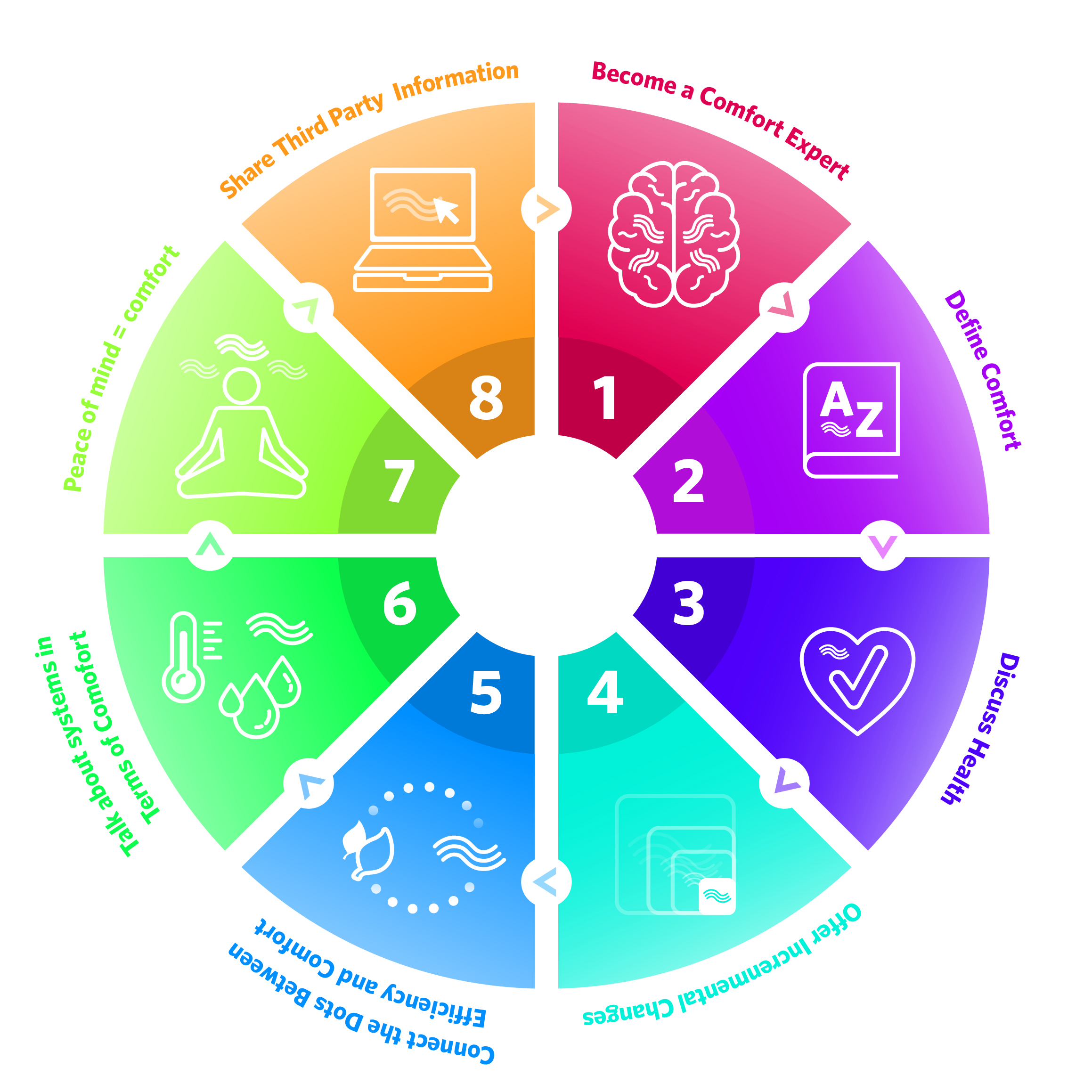
8 Ways to Talk Comfort

  1. Become a Comfort Expert

    Of course, it’s not possible to know everything. The key is knowing enough so you can easily introduce comfort into HVAC conversations and educate your customers on the role HVAC plays in comfort and livability. The goal is for your customers to see you as their comfort expert.

  2. Define Comfort

    Sometimes the easiest way to define something is by describing what it isn’t. Ask your customers if they have temperature swings on humid days between cycles, cold spots in the home or office, or trouble sleeping in the summer. By getting them to talk about issues they have, it’s easier to define what comfort is and what it means to them.

  3. Discuss Health

    While health can be a delicate topic, it is an important and personal one when it comes to comfort. For most customers, it is probably enough just to help them understand that the air quality in their home can affect their family’s health or worsen a pre-existing condition. Looking around the room to see if there are tissues placed in the open also demonstrates allergies in the family and that air quality can be an important topic.  Talking about health issues provides an easy transition to introducing the concept of indoor air quality.

Most people have a strong personal desire to be comfortable. They may not pay extra for a five percent energy efficiency increase, but they might pay more for air that does not agitate their child’s asthma.

  1. Offer Incremental Changes

    This one is a bit of a psychological approach. Big changes or purchases are often, by default, perceived as expensive, intimidating or overwhelming. Smaller, incremental changes, which deliver on low-hanging fruit or provide a manageable road map for achieving a larger goal, can be viewed as more approachable, doable and affordable.

  2. Connect the Dots Between Efficiency and Comfort

    Explain that you don’t need to choose between energy efficiency and comfort. A balanced approach is possible. Many of the advanced systems and technologies that deliver energy savings also provide better comfort and indoor air quality. Temperature consistency, energy efficiency, and humidity control are all aspects of systems that deliver higher comfort.

Innovative technologies like Copeland Scroll modulating compressors, advanced building controls, and Wi-Fi thermostats can help bring both comfort and efficiency to homeowners.

  1. Talk About Systems in Terms of Comfort

    When explaining the differences between systems, for example, focus on the comfort factors – humidity control, temperature consistency, better air circulation – rather than just cost or system performance differences. A customer might not care about what industry terms like variable speed or SEER mean, but they will want to hear about lowered humidity and how they won’t sweat or freeze at night.

  2. Peace of Mind = Comfort

    A correctly installed system operating at peak performance is what homeowners ultimately need for total comfort. Talk to customers about ways they can have peace of mind that their system will keep their family comfortable, now and in the future. Think beyond traditional service agreements to technology like the Sensi Predict that can help monitor systems, provide regular performance reports, meet customer needs and equip contractors to provide quick, accurate service.

  3. Share Third-Party Info

    Bolster your message with information from third party unbiased sources. AC & Heating Connect is a good resource for homeowners and contractors. OEM and trade association sites, like NATE,  ACCA and AHRI are other great resources as well.

There’s no better time than now to have the discussion. Think about the next engagement you will have with your customers and decide the best way to introduce the concept of comfort with them. Innovative technologies like Copeland Scroll modulating compressors, advanced building controls, and Wi-Fi thermostats can help bring both comfort and efficiency to homeowners.

*Emerson surveyed 298 U.S. consumers via Survey Monkey in October 2018. 

HVAC in the News: Should I really set my thermostat to 78 degrees?

Recently, a number of news articles have highlighted a 2009 recommendation from ENERGY STAR on using programmable thermostat settings to save energy.

While 78 degrees was used as an example on the ENERGY STAR website, a recent statement by ENERGY STAR says, “In order to save energy, the ENERGY STAR website recommends owners of programmable thermostats increase the air conditioning temperature setting by 7 degrees F when homes are unoccupied and by 4 degrees F when occupants are asleep.”

Whether you start at 78 degrees or another temperature that suits your family, bringing the temperature setting up while your home is empty, or while you are sleeping, can save on your energy bills.

Here are a few ways to improve the function of your air conditioning system, which will allow you to set the temperature higher and still be comfortable:

  • Program your thermostat to meet your family’s schedule. Using a Wi-Fi smart thermostat gives you the ability to make adjustments from your phone quickly, from anywhere.
  • Clean any dirt or debris from your outdoor unit
  • Change your air filter. Clean filters can lower energy consumption 5-15%
  • Clean air vents and grilles to ensure they are open and free of dust

See more HVAC Maintenance Tips

If you are in the market for a new air conditioning system, consider the following:

  • Look for a system that offers an important feature called “capacity modulation.” This provides lower energy consumption, improved humidity control, better air quality, and a more comfortable living environment.
  • Ask about the Seasonal Energy Efficiency Ratio (SEER), a ratio of the amount of cooling produced (BTU) divided by the amount of electricity (watts) used. The higher the SEER, the greater the air conditioner’s efficiency.
  • Ask your contractor about maintenance agreements that can keep your system running in top shape and ensure the system is installed correctly to maximize efficiency. New smart maintenance solutions use sensors to let you know how your system is running.

Learn more about Reducing Your Energy Costs with These Energy-Saving Tips

Finally, just to ensure that Americans are clear about the government’s stand on home cooling temperatures, the U.S. Department of Energy issued a statement saying, “It is the position of DOE that Americans should set their thermostats to whatever temperature they choose.”

Sources:

ENERGY STAR programmable thermostats:
https://www.energystar.gov/products/heating_cooling/programmable_thermostats

DOE Statement on Energy Star Thermostat Report:
https://www.energy.gov/articles/doe-statement-energy-star-thermostat-report

ENERGY STAR statement on thermostat settings:
https://fox43.com/2019/08/20/set-your-air-conditioning-to-78-degrees-during-the-day-82-degrees-at-night-federal-agencies-recommend/

CNN: A federal program says you should keep your home above 78 degrees:
https://www.cnn.com/2019/08/20/health/thermostat-recommendations-energy-star-trnd/index.html

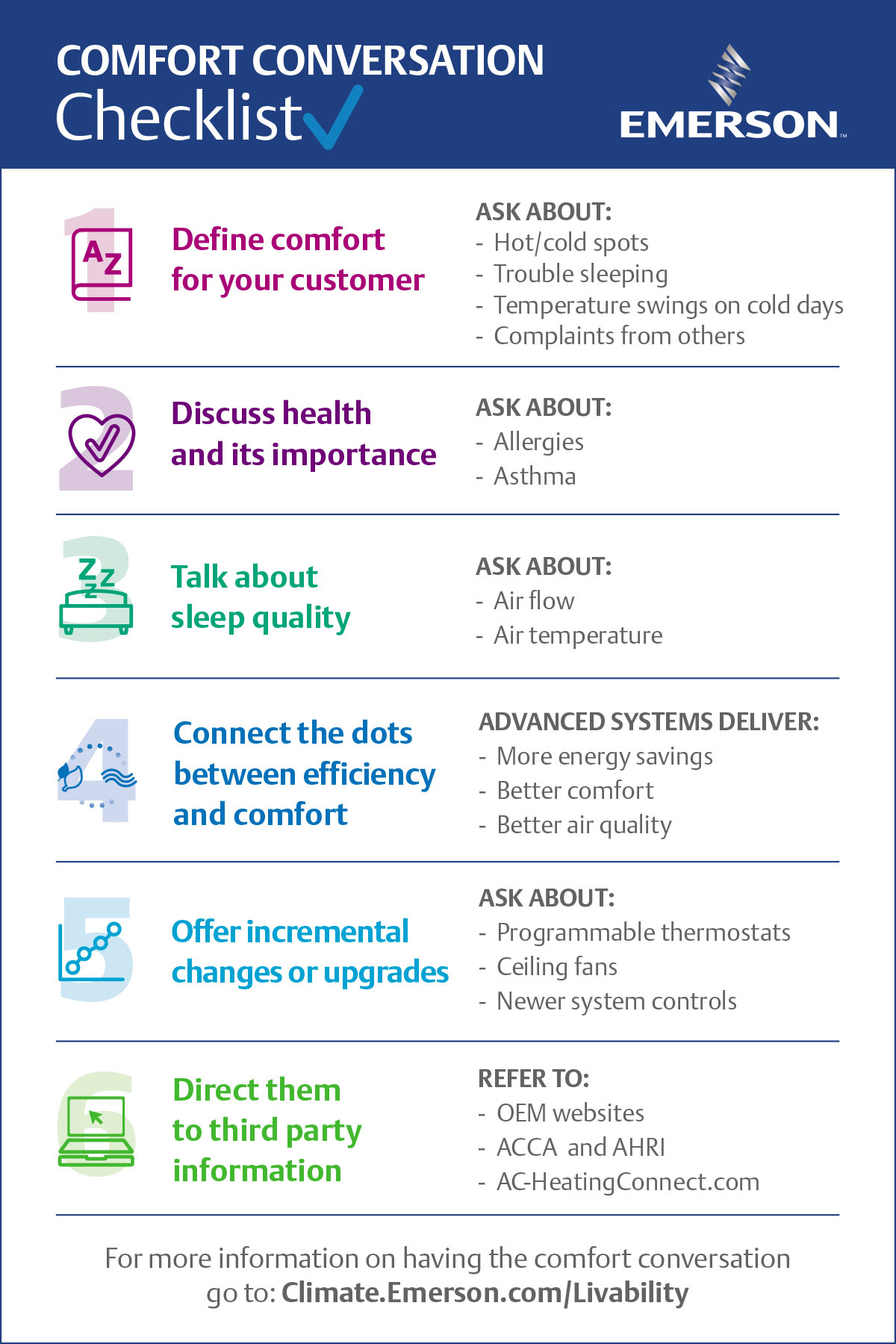
Comfort Conversation Checklist

When it comes to enhancing indoor environments, what detail is more important than the quality and comfort of the air in which we live and work?

We’ve developed a checklist for contractors to use with customers to guide them toward maximizing comfort, through discussions of health, sleep quality, incremental upgrades, among others. Having the comfort conversation on your next service call, will not only improve your relationship with your customers but will help them view you as a valued consultant.

comfort conversation checklist

To download the checklist, click here.

Back to School: The Contractor’s Guide to Continuing HVAC Education

Do you remember the old-time technicians who would grab the suction to charge while watching for “sweatback”? How about the techs who would laugh at flowing nitrogen while brazing as a crazy idea that they teach in school but that nobody does in real life?

Times are changing, and as refrigerants and technology all continue to evolve, they require us technicians to be on our toes, constantly learning new skills and embracing new ideas.

The idea that you can go through a year or two of trade school and then coast the rest of career without continuing to learn has never been true in the HVAC trade, but it has never been less true than it is today.

I had an ongoing conversation with a top educator and influencer a few months ago on impacts of relative humidity on evaporator coil temperature and some of the nuances in newer high-efficiency equipment. We had a friendly disagreement and went back and forth on the phone and via text until we agreed upon a test we could do to help prove the result.

We built the test rig and performed the test and we learned that both of us were right on some points and wrong on others. It resulted in a lot more clarity on both of our parts moving forward as we work and educate.

Not only had both of us have been through school, but we both also spend countless hours thinking about, testing and training on air conditioning. In this instance, we still needed to pause and learn on something that is probably quite obvious to someone else.

So, if we all accept that continuing education is a huge part of successful outcomes in HVAC what can we do to continue to learn and grow?

Options for Continuing Education

Manufacturer Training

Some of the best opportunities for education involves attending classes from manufacturers where they teach the specifics of their equipment as well as the underlying concepts. I recently attended a Copeland compressors course where the instructor went over common causes of compressor failure and we tore down some semi-hermetic compressors to see the result.

These sorts of classes are often available through your local wholesaler, but you can also attend classes directly from equipment and components manufacturers that will be worth the time even if it requires travel.

Trade Organizations

Both ACCA and RSES offer training classes in person and online. RSES also has regular training webinars or excellent topics and even online classes that qualify for NATE continuing education credits.

There are also many excellent conferences put on by these organizations that have classes and presentations that will really open your eyes to aspects of the trade you may have never considered.

Trade Schools

More and more fully accredited HVAC/R courses are showing up around the country, and many of them have online learning options where you can receive occupational certificates and even Associates degrees. I was speaking to a good friend of mine, Dick Wirz who is an instructor and author and he outlined how achievable and affordable an Associates of Applied Science in A/C & Refrigeration is at his local school, Northern Virginia Community College. While this is a significant time investment it may be worthwhile for some technicians to consider.

Free Online Resources

Over the last five years, we have seen an increase in quality online training content from manufacturers and independent content creators. I created HVACRschool.com and the HVAC School podcast for the very purpose of making quality HVAC/R learning materials more easy to find and consume for technicians. There are many more excellent sources, from “AC Service Tech” on YouTube to the HVAC On Air podcast, and many more. You can find many great resources now that can help keep you up to speed, without needing to look too far. I will caution you to be careful to cross-check things you learn from independent creators, it isn’t all high quality and some of it can even be dangerous.

Books and Bulletins

I will admit I am a sucker for books old and new. Some of the best information I’ve learned came from books that are 20, 50 even 80 years old on the basic concepts and science of our trade. I keep my eyes peeled on eBay for these old books and snatch them up whenever I can.

There are some excellent modern books like the RACT (Refrigeration and Air Conditioning Technology) manual, Fundamentals of HVACR, Refrigeration for Air Conditioning Technicians and many books published by ESCO. These books tend to be in-depth, deep dives into the trade and if you have never worked through one, I would highly suggest it.

Some of my favorite light reading comes from manufacturer technical bulletins and one of the very best apps on the market for technical bulletins is the AE Bulletins app (available on Google Play and Apple) from Emerson. Just to try it out, go ahead and download the AE Bulletins app and read AE17-1260 on compressor heating. I guarantee you will learn something new and relevant.

Habits of Continued Learning

I will confess there was a time a few years back where I got a bit bored and burned out. Too many long hours and too much of the same issues over and over…or so I thought.

As I started doing more training, I began paying more attention to little details, reading manufacturer data and bulletins and attending more classes I realized that there was a lot I missing and taking for granted. I’ve learned that the best way to stay engaged is to share what I’m learning with other techs and apprentices. My first A/C instructor used to say that teaching was the best way to learn and I’m finding that to be true over and over again.

If you want to be able to explain how everything you work on works to an apprentice, you will inevitably find that there are gaps in your understanding that need to be filled. This is the perfect opportunity to pause and take the time to learn something new.

More than anything you will need to stay in touch with your enjoyment and curiosity around the work. If you enjoy learning, then learning will never be a burden and often all it takes is a little focused attention to rekindle that flame of curiosity.

What is Your HVAC System’s Blood Pressure?

HVAC Static Pressure

We all know that blood pressure is a common indicator of a person’s health. If their blood pressure is within an acceptable range, they are healthy.  If their blood pressure is too high, there is often an issue restricting proper blood flow.  Your HVAC system has a similar reading that can ensure proper airflow, this reading is referred to as static pressure.

Static pressure in an HVAC system is a measure of the resistance of airflow through the ductwork, filter, coil, and furnace.  Much like your body, when the resistance to flow increases, your system must work harder to keep up.  Working the system harder leads to premature failure. The good news? This can be avoided with proper knowledge and maintenance.

What factors lead to improper static pressure:

  1. Ductwork: Improperly sized or improperly installed ductwork can lead to an increase in static pressure. Ductwork can be undersized–increasing pressure–or oversized–having too little pressure. Improperly installed or designed ductwork that has too many bends, lack of support, or ductwork that is collapsing results in additional resistance to airflow.  Return duct sizing should not be overlooked, as it can also affect static pressure.
  2. Filters: The size and type of filter used in an HVAC system affect the static pressure. A typical 1” pleated filter adds more static pressure than a 4” pleated filter.  A 4” pleated filter has a larger surface area giving the air more ways to pass through without restriction.
  3. Evaporator coil: If the evaporator coil is dirty and plugged with debris, a restriction to airflow will occur resulting in an increased static pressure.

What are the results of improper static pressure?

  1. Temperature variance throughout your home. You may notice that some parts/rooms in your house feel cold or warmer than other areas depending on the season.
  2. The HVAC system can experience component failures. Typically, blower motors and components associated with the blower motor circuit are the first things to fail.

How do I test for Static Pressure?

As a homeowner, we need to leave this test to the contractors.

What will a contractor do to complete this test?

With the fan operating on the furnace, the contractor will drill a small hole in the return duct before the filter, and another hole in the supply ductwork after the evaporator coil.  A manometer is used to measure the difference in pressure.  This measurement is then compared to the rating on the blower motor.  If the system is found to be operating out of the suggested range, your contractor should discuss options to correct the issue.

Measuring static pressure will allow your contractor to identify a problem before a larger failure occurs.  When you have your HVAC system serviced before the start of a new cooling or heating season, have your service contractor verify your HVAC system blood pressure, static pressure, is within an acceptable range.

Learn even more about HVAC Static Pressure from PV Heating & Air.

How to Prepare Your Facility for LEED Certification

In today’s green-focused climate, facilities with LEED certification move ahead of the pack. The benefits are substantial: LEED-certified structures maximize occupant health and productivity, use fewer resources, decrease lifecycle costs and reduce waste and negative environmental impacts.

LEED certification has more than just a positive environmental impact. Going “green” also influences another type of “green”: corporate finances. According to the U.S. Green Building Council (USGBC), LEED-certified buildings have faster lease-up rates and higher resale value as well as using less energy, water, and other resources. With those outcomes, it’s not surprising that LEED is the global leader when it comes to green building ratings, used in 165 countries and territories worldwide.

LEED Certification Categories

From new construction to renovation, residential to commercial, there is a LEED certification that applies.

  • BD+C (Building Design + Construction) is for new construction and major renovation, core and shell development, and specific facility types: schools, retail, data centers, warehouses and distribution centers, hospitality and healthcare facilities.
  • O+M (Building Operations + Maintenance) is for existing buildings in a range of project types and market sectors.
  • ID+C (Interior Design + Construction) is used to evaluate the designs of tenant fit-outs for projects in which the design team does not have control of the whole building. For example, when a company rents out a floor of an office building and is responsible for its own fit out.
  • ND (Neighborhood Development) is for those creating more sustainable, well-connected neighborhoods, which includes two certification options: plan certification (for any phase of planning and design) and built project certification (for neighborhood-scale projects near completion or completed within the last three years).
  • Homes is for building design and construction projects for single-family homes and multi-family projects up to eight stories, focusing on incorporating safe building materials, improving indoor air quality and reducing energy and water usage.
  • Cities and Communities, two separate certification programs, focus on developing responsible, sustainable and specific plans for social, economic and environmental conditions.

Multiple buildings certification options include volume certification (for an entire portfolio of building projects) and campus and multiple-building certification (for several buildings on a single site), as well as for government projects focusing on meeting the Guiding Principles for Sustainable Federal Buildings requirements.

Another category—LEED Zero certification—is for projects registered to pursue O+M certification or those certified under the BD+C or O+M rating systems that have net zero goals in carbon and/or resources.

There have also been changes to LEED, with USGBC rolling out its latest platform update: LEED version 4.1. Released in January 2019, LEED v4.1 improvements include updated reference standards, new methodologies and a simple data-driven path for ongoing performance measurement—all focused on the overarching goal of developing solutions that address unique markets. Each category has been provided with updates on specific changes of the LEED v4.1 recertification.

The LEED Certification Process

Pursuing LEED certification begins with selecting the appropriate rating system for the project and reviewing the minimum program requirements to verify eligibility for LEED certification. Next, use the LEED Certification Guides to move through the LEED process from registration to certification.

While facility managers and owners can choose which credits to pursue, all projects must meet specific prerequisites—minimum requirements that don’t count toward points but are mandatory for LEED certification. LEED ratings are awarded based on a point scale: Certified (40-49 points), Silver (50-59 points), Gold (60-79 points) and Platinum (80+ points), with points earned across a range of categories.

Certification applications are then reviewed by Green Business Certification Inc. (GBCI), a third-party organization, to determine the appropriate certification level.

To help with the process, the USGBC website has Certification Guides, Credit Library, Reference Guides, and a comprehensive online toolkit. An optional LEED precertification is also available to help facility managers determine the credits and prerequisites the project is most likely to achieve and to illustrate the commitment to LEED certification.

Facilities can also utilize Arc, an online platform developed by Arc Skoru Inc., to evaluate performance metrics and identify areas of improvement. According to USGBC, the Arc platform provides an alternative path for complying with two LEED prerequisites and sixteen LEED credits in the LEED O+M: Existing Buildings v4 (LEED v4 O + M) rating system.

Facilities can use Arc to measure building data across five categories, with a goal of achieving a Performance Score of at least 40. Projects must also commit to a minimum of three-year participation, submit the initial certification and an update of that certification within that three-year period and meet other requirements.

The LEED registration and certification fees are based on the fee schedule published at the time of registration and determined by the project’s rating system and size. Projects submitted via LEED Online have automatic access to Arc at no additional cost.

Maintaining Your LEED Certification

LEED certification isn’t a once-and-done achievement. Facilities that have previously earned LEED certification must recertify on an ongoing basis to benchmark performance and ensure performance at the intended level. LEED v4.1 enables LEED-certified facilities to be recertified, regardless of their initial rating system or version, according to USGBC. The Recertification Guidance for LEED Buildings (available for download) details the requirements and process.

Once completed, the facility must contact USGBC to activate the recertification, with the successful completion earning the project the LEED O+M certification under the current rating system version: LEED v4.1.

LEED certification is more than just a way to boost a company’s brand. It also provides a comprehensive way of evaluating a facility’s performance, both in terms of meeting environmental goals and enhancing the location from a human perspective, and a path forward for ongoing improvements.

Wait a Minute! Don’t Start a Home HVAC Project Without this Timely Advice

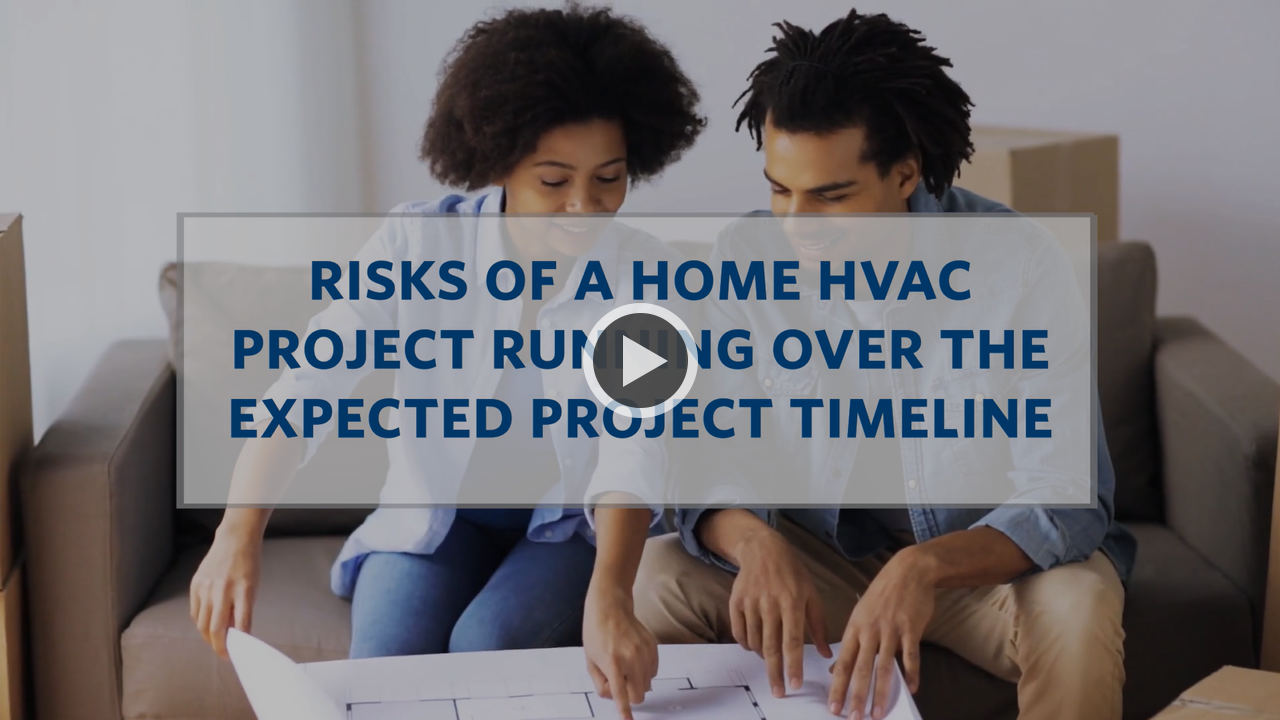
Risk of a Home HVAC Project Running Over The Expected Project Timeline Video Overlay


Communication is key to a successful install or repair of your home’s HVAC equipment, especially when the project timeline is limited. If the expectations aren’t clear between the homeowner and the contractor, projects can go off-track and off-budget quickly.

There’s plenty of great advice about how you can choose a great contractor for your HVAC project. As you get started, you can expect that it’s the contractor’s responsibility to confirm their qualifications, to provide any references they may have, and to walk you through their general plans for completing the job.

Selecting a certified contractor for a home install or repair is a great way to move forward with confidence, as continued education in HVAC technology and regulation is typically required to maintain certification. It’s recommended to request proposals from at least three contractors before moving forward with an HVAC install. If you take multiple contractor proposals into consideration, confirming a time to complete should be an easier process. Proposals that lack details of timing and equipment should be a red flag.

Common Risks of An HVAC Program Running Over the Expected Project Timeline

  • Additional Project Costs | You likely went to your contractor with a defined budget for the HVAC project. Delays or unforeseen timing issues can easily inflate your budget.
  • Seasonal Heating or Cooling Issues | You don’t want to be stuck without a working HVAC system for any longer than necessary, especially in the heat of the summer or bone-chilling cold of winter.
  • Conflicting Projects | Reputable contractors often have a “busy season,” where the majority of their installs and repairs take place. Letting the timeline slip may cause your contractor to have timing conflicts with other projects.

It’s important that a contractor gets a clear understanding of your needs before committing to a time to complete. This will likely include a home visit or inspection before the project can begin. Depending on the outcome of the inspection and the products recommended by your contractor, it may take over a week to begin the real work.

To set your initial expectations for the timeline of your project, here are some basic guidelines:

  • A furnace install will take 4-10 hours
  • An AC install will take 4-8 hours
  • A complete furnace and AC install will take 8-14 hours
  • Repairs to HVAC equipment are too variable to estimate

Projects not completed within the timeframe can inconvenience contractors, as well. When a project has to switch hands after it’s already begun, the job is less efficient for the homeowner and contractor alike. Once you agree to a time to complete, you have a responsibility to uphold your end of the bargain. Be sure that you understand what access the contractor will need to your home, and plan your family’s time accordingly.

As the homeowner, the more direct you can be with your requirements for the project, the better. One of the easiest details to communicate is the desired project timeline. Finding a good contractor can seem like a lot of upfront work! But, you’ll be thanking yourself when your install or repair is completed up to your standards, within your budget, and within your desired timeframe.