Preventing Indoor Mold Growth

Preventing Indoor Mold

Managing the humidity levels in your home is extremely important to create a comfortable living space. Humidity levels that are too high or too low can cause health problems for you and your family, including mold.

The ideal relative humidity for your home should be somewhere between 30 and 50 percent. You may start to experience issues if humidity levels rise above or below that range. Mold growth is common with high levels of humidity, and it can be extremely harmful to both your house and your health. The good news is that there are ways to prevent it.

With longer runtimes, modulating systems remove more moisture from the air, preventing mold growth. And you want a system that can meet ideal humidity levels consistently. A two-stage system keeps home humidity within a safe range and would be a step in the right direction to help reduce the risk.

To read more about the benefits of modulating systems, read here.
Energy Regulations will Impact the HVAC Industry in 2018

In early 2018, the U.S. Department of Energy (DOE) implemented energy regulations impacting the commercial heating and cooling industry. These new standards will change how commercial rooftop air conditioners, heat pumps and warm-air for “low-rise” buildings are engineered.

The goal of these new standards is to improve efficiency and cut energy usage, saving homeowners and other property owners money in the long run. However, 2018 will be a transition year for the industry. CroppMetcalfe recently published an article describing some of the main areas of impact.

How Energy Regulations Impact Consumers

HVAC consumers are most concerned about how the changes will affect the initial product and installation costs of these new systems. Efficiency isn’t cheap. Although it’s uncertain exactly what the implications will be, experts have the following expectations:

  • The first upsurge of technology will likely result in higher price tags.
  • Utilities will need to adjust their programs and savings calculations.

In the long term, business owners and homeowners will benefit from the changes as they experience the value of higher efficiencies.

How Energy Regulations Impact Contractors & Manufacturers

Experts believe the new efficiently expectations will lead to a massive reduction in energy use over the next few decades. The DOE will implicate the new standards in two phases:

  • Phase One – Energy-efficiencies increase in all air conditioning RTUS by 10 percent as of January 2018.
  • Phase Two – The increases will expand to 30 percent by 2023, including warm-air furnaces too.

It may be the responsibility of an HVAC professional to stay up-to-date with industry developments, but they will need time to learn the DOE standards and how it affects daily work in the industry.

So far, most heating and cooling manufacturers have embraced the efficiency demands and changes. The DOE receives more accurate readings by utilizing IEER, which assesses the machine’s efficiency based on its seasonal performance. It takes time for manufacturers to revamp their units, but this level of stability should help them design HVAC units that will meet the new standards.

Should Air Ducts be on Your Summer Cleaning List?

While most homeowners spend time dusting their woodwork and cleaning the windows, it’s easy to forget about the parts of your home that you can’t see. When was the last time your home’s air ducts were cleaned out? If your answer was about three to five years ago, you might consider adding air duct cleaning to your to-do list this summer.

Air Duct Cleaning

The National Air Duct Cleaners Association (NADCA) suggests that air ducts be cleaned out every three to five years. However, this time frame can change based on a few different factors. It can be difficult to determine when it’s time to have your air ducts cleaned.

Some good questions to ask yourself include:

  • Do you think there may be mold in your air ducts?
  • Have noticed an increased number of dust mites around your house?
  • Did you recently complete construction on your house?
  • Did you recently purchase a new home? If so, do you know the last time the air ducts were cleaned?
  • Do you have pets that shed frequently?
  • Do you or your family members struggle with allergies or asthma?

If you still aren’t sure whether your air ducts need to be cleaned out, the easiest way is to take a look and see if you notice any mold, dust or vermin. If so, it’s time to call a professional air duct cleaning service. We recommend reviewing a list of the NADCA approved professionals.

The Science of Livability: 8 Tips to Start the Comfort Conversation

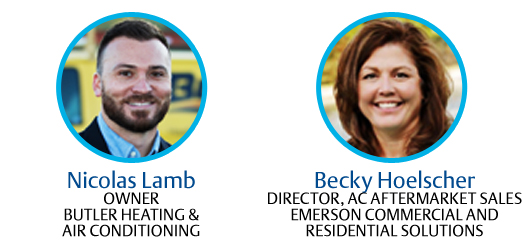
With the recent release of the Science of Livability e-book, Copeland is pairing up with an outside expert to discuss 8 tips to start the comfort conversation in their upcoming webinar. Join Becky Hoelscher of Copeland and Nick Lamb from Butler Heating & Air Conditioning for tips on how you can talk about comfort with your customers. Becky is the director of AC Aftermarket sales for Copeland and Nick is the owner of Butler Heating & Air Conditioning. With their combined experience and knowledge in the industry, they will provide great insight on how you can become an expert on the topic and connect the dots between comfort and efficiency. They’ll touch on why the concept of comfort is important to your customers and how you can navigate your way through that conversation.

Presenters:

presenters

Now is the time to have the discussion with your customers, so make sure you’re prepared.

Watch Recording >  Download Presentation >  Download Q & A >

Ventilation Tips | Everyone Needs Some Fresh Air

On average, we live about 87 percent of our lives indoors according to the EPA. And we spend an additional six percent of our lives in vehicles, which leaves only seven percent of our time for the great outdoors. Fresh air is hard to come by with most of us spending the majority of our time inside. Learn more about the importance of indoor ventilation from our industry experts below.

What are Ventilation Guidelines?

The industry’s current ventilation guidelines outline the parameters for the minimum ventilation rate required to maintain acceptable levels of bio-effluents (organic contaminants emitted from the human body).

In residential homes, terms such as air change rate or air changes per hour indicate how often inside air is replaced or re-circulated with outside air. Air change rates range from 0.4 to 1.5 air changes per hour depending on how tightly sealed the house is.

Facility managers use terms like cubic feet per minute (CFM) and liters per second (L/s) when managing commercial buildings. In these locations, minimum ventilation rates typically range from 5 to 25 CFM/person.

What Does This Really Mean?

Homes naturally have cracks and crevices that allow small amounts of outside air in. The simple solution is to open the windows in your home on a warm, sunny day. But for most of us, it’s either too hot or too cold to keep the windows open year-round. In these cases, use heat recovery ventilators (HRV) or energy recovery ventilators (ERV) to enhance air circulation.

Windows are often sealed shut in commercial buildings. In these cases, contractors install dedicated outdoor air systems (DOAS) to increase the ventilation rates.

For homeowners, we also recommend installing a filtration system depending on where you live and your health concerns. Outside air is full of pollen, dust, moisture and other contaminants which ultimately decrease indoor air quality.

UV Lights – What’s the Glow? | Improve Your Home’s Indoor Air Quality

Improve Indoor Air Quality with UV Lights

Heating and cooling systems make homes and businesses comfortable places to live and work by controlling temperatures and humidity levels and circulating air. While this is beneficial if the air is clean, circulating contaminants can negatively affect indoor air quality. That’s why it’s important to make sure you have the right air cleaning devices installed.

A Simple Way to Improve Indoor Air Quality

One simple way to improve the air quality air in your home is to install ultraviolet lights in your HVAC system.

Improved indoor air quality can benefit your everyday life by:

  • Controlling mold and bacteria;
  • Reducing infectious diseases;
  • Reducing smells and odors;
  • And improving asthma.

How UV Lights Clean the Air

UV lights purify the air by killing mold and bacteria, ultimately funneling clean air into the HVAC system for circulation. UV lights remove contaminants by emitting a light that destroys their DNA makeup. The contaminant is then not able to repair itself and is considered non-threatening.

UV lights are not a one size fits all application. You need to consider the location and size of the HVAC system and the number of UV lights you’ll need. Consult your local HVAC contractor for help installing ultraviolet lights to breathe cleaner air.

Student Perspectives on HVAC Recruiting

The HVAC industry is continually growing.  Check out our podcast where we interview students to hear their perspectives, firsthand, on why they believe it’s important to share their experiences with peers about the UVCC HVAC program and why this could be the right career choice for others as they look at future career opportunities.

Hosts:
Lindsay Headings, Isaac Nuss and Matt Ricker

Guests:
Upper Valley Career Center HVAC Students

Daringer Bernardi Scott Boettiger Jake Browning
Jacob Couchot Keith Deardorff Dartagnan Devaudreuil
Lane Eilerman Douglas Foster Kirsten Fries
Kurt Hoover Cole Hopper Jacob Hummel
Garrett Kimmel Tanner Kimmel David McMillan
Timothy Minnich Jacob Nelson Seth Reeves
Mason Sanders Tristen Shank Noah Shoemaker
Tyler Siegel Andrew Spayde Brendan Thomas
Dylan Wray

Timestamps:

  • 0:05 – Welcome
  • 0:40 – Why understanding young adults perspectives is important
  • 1:55 – What students learn from the HVAC program
  • 3:37 – Key program influencers
  • 6:50 – Why Upper Valley Career Center?
  • 9:35 – Recruiting women in HVAC
  • 15:06 – Importance of developing soft skills
  • 17:28 – Wrap-Up

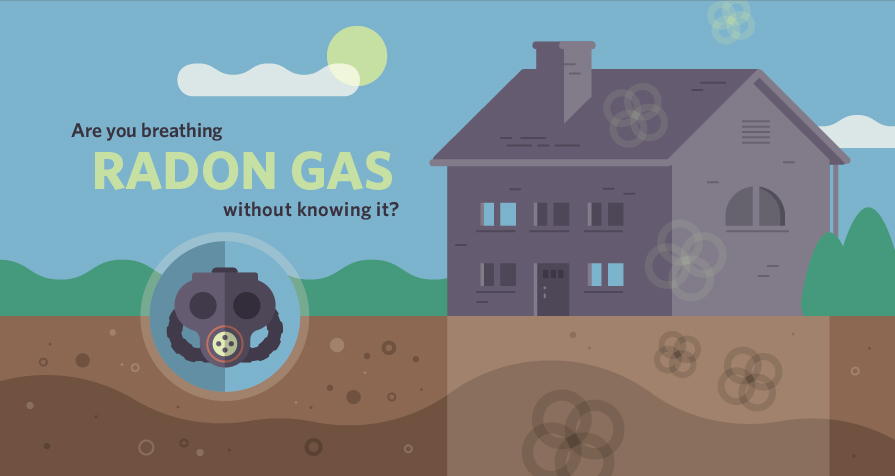
Are You Breathing Radon Gas Without Knowing It?

Frequently Asked Questions about Radon Gas

Are you breathing radon gas without knowing it?

What is Radon Gas?

Radon gas is a radioactive gas produced from decaying uranium in the igneous rock below the earth’s surface. Exposure to radon gas over an extended period of time has been linked to some forms of lung cancer. In fact, the Surgeon General and Environmental Protection Agency (EPA) have linked over 20,000 cases of lung cancer to elevated radon levels.

Should I be concerned?

Radon is present in all U.S. regions, but areas that have igneous rock layers are especially prone to elevated radon levels. You might see elevated radon levels in homes with basements and wells for water supply.

How do I know if the radon levels in my house are elevated?

Radon test kits can be purchased at a reasonable price through an HVAC contractor or on the Internet. There are short-term and long-term kits available.

Short-term kits typically run through a 30 to 90 day period. The sample is then delivered to the lab for analysis, and the results are sent back to the consumer.

Long-term kits last for an entire year. Long-term testing is often preferred because radon levels can shift as the seasons change whereas a short-term test may not capture the most accurate results.

What do I do if my radon levels are elevated?

Call your local HVAC contractor to have an analysis completed and install a radon mitigation system. These systems are simple, inexpensive and easy to have installed.

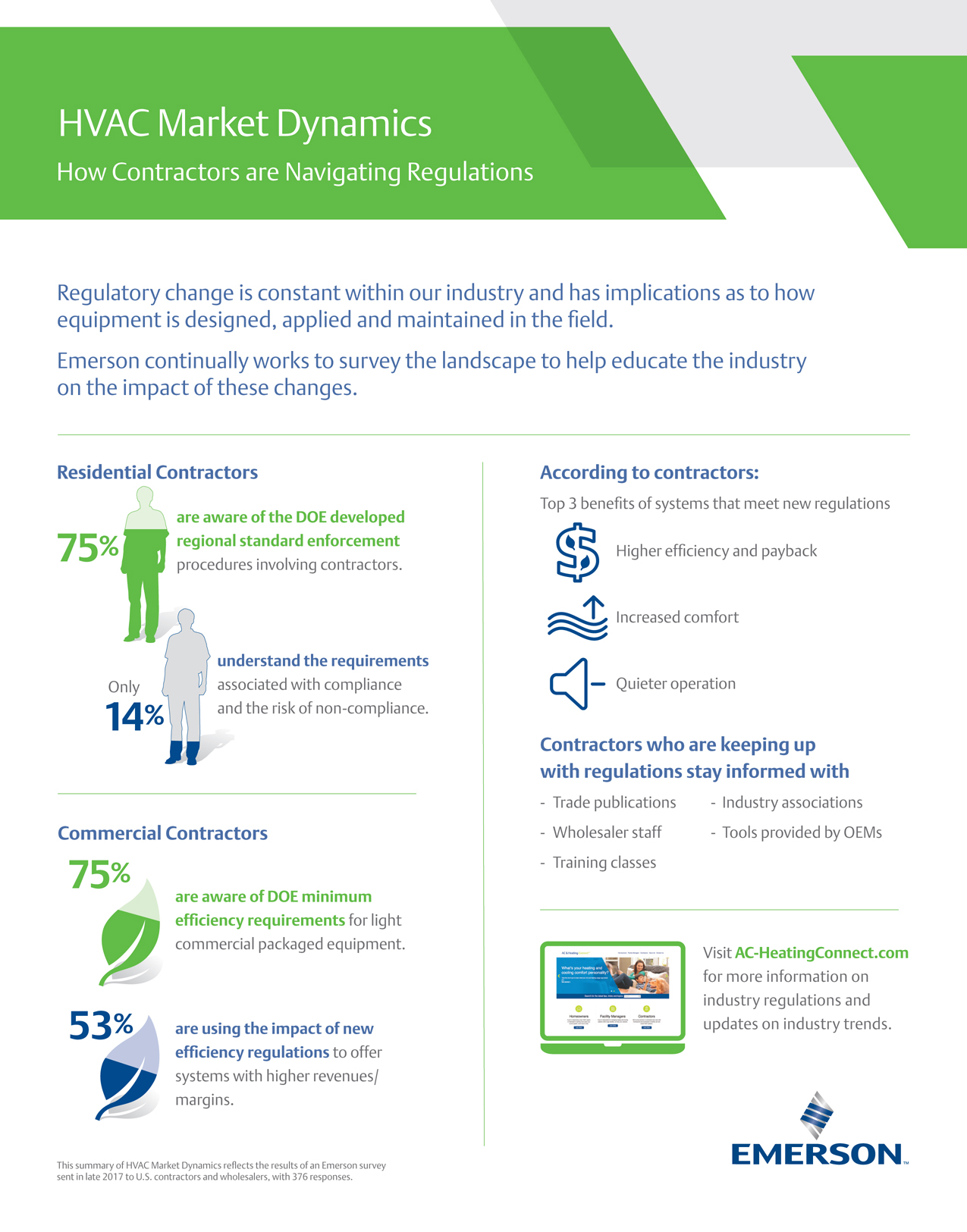
HVAC Market Dynamics: How Contractors are Navigating Regulations

Regulatory change is constant within our industry and has implications on equipment design, application and how it’s maintained in the field. Emerson continually works to survey the landscape to help educate the industry on the impact of trends and regulatory changes. See our newest HVAC Market Dynamics report to see how contractors are responding to the latest efficiency requirements.

INFOGRAPHIC: HVAC Market Dynamics: How Contractors are Navigating Regulations

To download the infographic in PDF, click here.

Live at IE3 2018

Emerson recently attended the annual IE3 Conference for 2018, hosted by ACCA. Check out our interviews with leading contractors and vo-tech students with their perspectives on industry trends, why they choose to attend shows like IE3 and what happens during a day in the life of a contractor.

Hosts:
Lindsay Headings, Isaac Nuss and Matt Ricker

Guests:

  • Edward McFarlane, Haller Enterprise Inc.
  • Jordanny Williams, Ferris State University
  • Annie Vanderstelt, Ferris State University
  • Vincent Gillette III, Gillette Air Conditioning

Timestamps:

  • 0:10 – Welcome
  • 1:29 – Highlights from the show
  • 2:40 – Changes in the industry
  • 4:06 – Technology being used
  • 6:00 – Trends changing in the industry from a student’s perspective
  • 8:40 – Women in the industry
  • 9:59 – New technology
  • 10:29 – Typical day as a contractor
  • 11:30 – Wrap-Up