Winter can be tough on outdoor equipment. When the weather warms up, there are a few steps you can take to prepare your air conditioner for the summer. With a little effort, you can set up your home for a trouble-free cooling season.
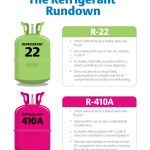
R-22 specified equipment makes up the largest portion of the current U.S. air conditioning residential installed base, and over the past few years the price of R-22 refrigerant has increased to the point where homeowners are starting to look for alternatives.
I recently stopped by an old friend’s house, at which his AC unit happened to be down. He was quick to explain that the AC unit would run fine, until about 4-5 minutes into the call for cooling cycle, in which the indoor blower motor would stop. Knowing that I have been working in the HVACR industry the past 25 years, he asked me to troubleshoot the cause of the malfunction.
by Scott Lanzer | Jun. 20, 2013
I can remember when I first started in the HVACR industry; there were only 3 colors of refrigerant bottles in the back of the truck – green, purple and white. Along with these limited color options, I can remember using cardboard slide rules and calculators to determine charge amounts and system failure diagnosis.
The next refrigerant transition we are anticipating will be driven by government regulating authorities’ desire to address concerns about “global climate change” or “global warming”.
As more systems require replacement due to age, or repairs that make it more economical to replace, one of the questions likely to come from a homeowner is about refrigerants. Homeowners can find a mix of confusing information online so following the guidelines below can help provide clear, concise answers when talking to your customers.
Ultimately this question is best answered by a qualified contractor, but there are some general rules that can help guide your conversation. Depending on the age, how often your system runs and where you live you could be better off replacing rather than repairing it.