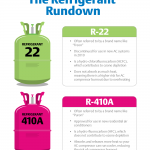
As global, national, and state regulations have targeted the phase-down of HFCs, the industry has seen a shift toward alternative refrigerants with lower global warming potential (GWP). While more environmentally friendly, many of these emerging options bear a degree of flammability.
To protect against floodbacks on systems vulnerable to liquid refrigerant damage such as heat pumps, the accumulator’s function is to intercept the liquid refrigerant before it can reach the compressor.
Refrigerant regulations are coming – the question is when and how, and that depends on the state in which you do business. Read on for more information.
Winter can be tough on outdoor equipment. When the weather warms up, there are a few steps you can take to prepare your air conditioner for the summer. With a little effort, you can set up your home for a trouble-free cooling season.
The next refrigerant transition we are anticipating will be driven by government regulating authorities’ desire to address concerns about “global climate change” or “global warming”.
Ultimately this question is best answered by a qualified contractor, but there are some general rules that can help guide your conversation. Depending on the age, how often your system runs and where you live you could be better off replacing rather than repairing it.