
What’s the Difference Between R-22, R-410A & Lower Global Warming Potential (GWP) Refrigerants?

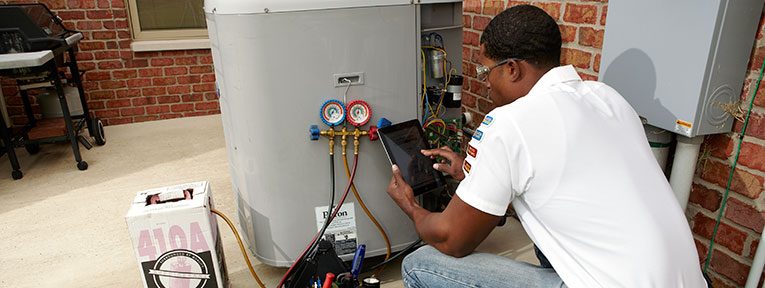
AC Heating Connect Service Tech uses an iPad 6 for important HVAC information

Comparing Refrigerants Side-by-Side

As a homeowner considering an HVAC purchase, it’s important that you understand the difference so you can make the best decision for your system. We’ve outlined below the main differences and why they matter.

R-22

  • Often referred to by a brand name like Freon®
  • As of 2010, R-22 was discontinued for use in new air conditioning systems
  • R-22 is a hydro-chlorofluorocarbon (HCFC) which contributes to ozone depletion

R-410A

  • Often referred to by a brand name like Puron®
  • R-410A will be discontinued in new, residential air conditioners beginning Jan. 1, 2026. New R-410A systems can still be installed through Dec. 31, 2025.
  • R-410A is being phased down and replaced by low GWP refrigerants (A2Ls).

A2L Refrigerants

  • The HFC phasedown is being driven by the American Innovation and Manufacturing (AIM) Act, which has authorized the Environmental Protection Agency (EPA) to regulate the supply and demand of HFC refrigerants.
  • A2L refrigerants are characterized by mild flammability, low toxicity, and low GWP. They include hydrofluoroolefins (HFOs) and HFO blends.
  • Low GWP refrigerants, R-32 (675 GWP) and R-454B (466 GWP) for air conditioning, have been introduced.
  • New equipment and systems using low-GWP refrigerants will be introduced in 2024.

What does this mean to homeowners?

During 2024 and 2025, homeowners looking to replace their AC or heat pump (currently using R-410A) or needing a full system replacement can still replace their unit with R-410A systems (based on availability).  More than likely, this will be a lower cost than the new A2L systems.  However, R-410A refrigerant production will continue to be phased down.  There will be a major cut in HFC refrigerant production / import – 40% in 2024 and 70% beginning in 2029 (potentially driving R-410A prices up).  Limited availability of R-410A will impact service costs (units requiring refrigerant) in the future.

If you’re looking for a full system replacement you can request a quote for one of the new A2L systems.  The low global warming potential systems are more environmentally friendly and have a reduced impact on climate change versus previous refrigerants.

As always, consider potential rebates from your utility company or federal tax credits that are available for selecting higher efficiency systems. You can learn more at www.desireusa.org and www.energy.gov/save/rebates.

Related Articles
HVAC Glossary of Terms

Share
print

Was this helpful?

Vote This Post Up 1,687Loading...

449 thoughts on “What’s the Difference Between R-22, R-410A & Lower Global Warming Potential (GWP) Refrigerants?

    • Hi Danny,

      Great question, this one has been coming up a lot lately. R-22 and R-410A are completely different substances, and should be treated as such.
      Mixing these two refrigerants together in a system is NOT advisable. Please call a local HVAC Service Company and allow a qualified Technician to inspect your equipment.

  1. Our air conditioning stopped working and we hired a AC company to fix it. They told use that we needed to replace the air handler but not the 13 year old compressor. The AC was not worked correctly since the installation. House never gets below 85 degrees and the AC unit run all the time. Since the new unit was installed, our electric bill has doubled. Did the company mislead use by not installing a new compressor. Are we doing damage to the new air handler we bought? Any suggestions?

  2. Hi Anne,

    As long as the unit is sized correctly, it makes no difference which approved refrigerant is used. My thought, either the blower speed is not set correctly or the unit (possibly due to temperature at the time of charging) might need it’s refrigerant charge amount checked. Either of these would require the company that did the installation to return to the job. All contractors understand the important of satisfied customers and should be happy to help find a solution.

  3. I just had a new 410a 5 ton condenser and blower installed replacing an older r22a. The air generated is not nearly as cold as the r22a. Can’t get the house below 80 degrees. What’s wrong?

    • Is the new unit the same tonnage capacity as the old unit? IE 3 ton – 3-ton? If over-sized for the home it won’t run long enough to pull the humidity out of the air. Perhaps the installer didn’t vacuum the lines down enough or properly before adding refrigerant or perhaps not enough of it. I had a 21 year old 2.5 ton Comfortmaker split system heat pump and just replaced it with a 2.5 ton Goodman using 410a and it is colder than the R22 ever was. Have a technician check your system and perhaps recover all refrigerant, pull a vacuum and replace the refrigerant. Could have been a bad/contaminated batch.

      • In June we replaced our old system with the new R410 system. During the summer our AC performed poorly failing to reach 78F inside and raising our electric bill. Now the system fails to turn off until outdoor temps exceed 60F, while the overnight low is 50F…with our thermostat set at 74F. Our old systems were always set at 78F Technicians have verified refrigerant is within range on numerous occasions. I can ask them to vacuum the lines, but frankly do not believe 410 systems are as good as old 22 systems. We use a 3 ton system, 1845 sq feet. The design performance test comparisons were limited in range, 55F to 82F, and R22 outperformed R410A in those. Please tell me why those results should not be extrapolated to predict poor R410A performance over true operating ranges? Also, why are contractors not raising the tonnage to compensate for this during installation?

        • On your question about R410A versus R22, the OEM’s design the equipment around the different properties of the refrigerant to meet a certain capacity and efficiency. There should not be any difference between the performance of systems with different refrigerant.

          As for your particular situation, if you only replaced the outdoor unit and not the indoor coil you might check to make sure those are properly matched. We have heard of a few situations where people upgraded the outdoor to R410A but left the old R22 indoor and this can lead to problems. One other thing you might do is check the specs of the unit you installed versus the one you replaced – they should have similar capacity (BTUH). If nothing else has changed in your living space (size, windows, insulation, etc) and the old and new system are similar in size and the charge is right it should be keeping up. If none of this works and the contractor is sure the amount of refrigerant is right and there are no leaks, etc., you might also try calling the OEM who built the equipment to see what they have to say about it.

          • Complete system change out from old to new, including the line sets. Technicians from the same contractor have reported correct pressures, including their boss…who has checked them twice in the past three weeks. Concerning the OEM, I went to their website and sent reports concerning their model. I also found their customer service staff phone on line. Their staff reported none of the technical requests on the online form are submitted to their engineers. In fact they go to the customer service personnel, who cannot answer actual engineering questions. They told me to contact my contractor and have him contact their company. They suggested I get another area contractor to verify my system is installed correctly, should I deem to pay for such service. In short, worthless OEM assistance.

            Currently, my contractor is ducking my calls. I wonder why?

  4. It is vitually impossible to retrofit a system designed for R22 to be suitable for use with R410A. The compressor and other major components are totally different and you would have to change all of them. There are some approved R22 retrofit refrigerants available like R407C, but most of these would require you to change the oil in the compressor. R22 systems use mineral oil and the retrofits use synthetic (POE) oil. It might be better to check with a qualified contractor to advise you on your options. The contractor might also help you find the leak that is causing your system to lose charge. In any case, be careful with matching the right oil with the right refrigerant because some combinations can cause clogging in the system and poor lubrication which can lead to worse problems and could force you to buy a whole new system. Hope this helps.

  5. P;ease send me the details of what all I need to purchase to recharge with R-410 as a substitute for R-22. I have the regulators/hoses for the high and low pressure ports, If that will save me a few bucks. please let me know what the prices for what you recommend too. thanks you, John Berry

  6. R410A requires a redesign of the R22 system and R-410A can’t simply be substituted for R22 in the R22 system. There are increases in heat exchanger efficiency with R410A versus R22. When the heat exchanger is properly sized for the increase in efficiency the air side delta Ts are approximately the same for R22 and R410A systems. Hope this helps.

    • my old unit is shot and I need a 3.5 to 4 ton unit and I have no idea what to get that will successfully work with R410A (what brand/model) that will not fail as others have with new refrig – seems most are being investigated for failure with R410A. I also don’t know who to get to install it (Little Rock, Arkansas). it is over 100 degrees many days and my unit is set on 74 and only reaches it overnight and when I return from work house is 82 degrees. I desperately need to know what to get that will work well with new refrig. The $ outlay does not allow for errors. Please consider emailing me with answers. I sincerely, appreciate your help – Valerie

      • Hi Valerie,
        R410A has been the primary (only) refrigerant used in new, residential air conditioning equipment since January, 2010. Exceptions have been R22 partial replacements and R22 used for re-charging in the field. The industry experience with R410A has been very good overall as well so I am not sure what failures you are referring to in your post. If you are considering a new system, about the only choice you will have will be with R410A, unless you are just changing the outdoor unit. In this case, you might find a compatible R22 outdoor unit that was built before 1/1/15 to use in a partial replacement (assuming your indoor is R22).

        The charter for this site does not allow us to comment on or recommend any equipment brands or specific service providers. We do however, support industry organizations like ACCA who provide the training and certification of HVAC contractors. Here is their link to their search tool.

        http://www.acca.org/locator

        I hope this information is helpful to you.

  7. Dear all,

    Good morning,

    I am working in industrial as well as heavy commercial refrigeration system designing, as per above it is cleared that instead of R22, R410 is reliable to use, My query is shall we use R410 in heat pump application & what about delta T calculations in heat pump

  8. R-410a will also be phased out at some point in the future and is no better for the environment than R-22. R-410a has a higher Global Warming Potential (1725 GWP) than R-22 (1700 GWP). R-22 has only a Ozone Depletion Potential of 0.05 and the decision to push R-410a over R-22 was more of a political decision than an environmental one.

    • everything is political nowadays, and it’s nothing we can do about it. My husband passed away last year and left a full container of R22. As a widow, needing money, I don’t even know how much to sell it for, do you?

      • The local on-line marketing sites today show prices ranging from just under $200 to a little over $250 for new 30 lb. containers. You could also just call one of your local HVAC contractors as they use R-22 all the time. I am sorry for the recent loss of your husband. I hope this information helps you in some way.

    • we had a 1986 lennox ac with r-22 freon and made our house freezing in the summer. It worked great for years until 2007. we got a new one and it ran on r410a but broke down in august 2013, so now we have a 3 ton goodman ac and works real good

    • BIG COMPANIES LIKE TOSHIBA ARE STILL ADVERTISING AND SELLING NEW R22 AC SYSTEMS IN BIG NUMBERS, WHAT MIGHT BE THE REASON BEHIND IF THEY KNOW R410 SYSTEM IS MORE EFFICIENT AND GOOD FOR THE ENVIRONMENT.

      • According to the Montreal Protocol, R22 systems can still be sold in developing countries and only developed countries are restricted from selling new R22 systems. Also, R410A systems are not necessarily more efficient, because the refrigerant is only one factor in determining the system efficiency. Other components can be changed to hit a certain level of efficiency so it is important to read the SEER labels on the equipment and not just the refrigerant. R22 was banned to prevent further deterioration of the Ozone layer. You can find more information on the following link.

        http://www.unep.org/ozonaction/Topics/HCFCHelpCentre/HCFC_FAQs/tabid/52078/Default.aspx

        • Deterioration of the Ozone layer is supposed to bring about the next ice age. Maybe we should be using R22 to combat Global Warming.

          • Global warming causes the ice caps to add water changing the salt percentage that stops the circulation of the oean currents that would cause a frozen ocean and land mass in tropics. So don’t use R-22.

        • Proudly use R-421 or R-422 to replace R22 in older R-22 units and get years more life out of them… I have seen 30 plus year old R-22 units still cranking out the cold…

          I have also seen new R-410a units with burnt up Scroll Compressors (Not a Scroll Compressor Fan, don’t think much of them) These newer units were less than 5 years old… A lot of them. Of course the HVAC companies love the new R 410a units and dislike the old R-22 systems and so does the government, because every time you buy something new you have to pay TAXES on it and the HVAC companies make big bucks on systems that frequently go down…

          R-410a systems may save you in electric cost but my experience with them is, they cost you more in Tech Service, so you may or may-not save anything. Unfortunately the Government is forcing you into R-410a by making R-22 parts unavailable soon. But if you upgrade your R22 systems by inspecting the systems and diagnosing any parts that look like they may be going to fail …E-Bay is a great place to find parts

    • I had r22 coils installed on my furnace 15 years ago, hoping to get central ac someday. Can r410a be used with these coils?

      • Hi Frank – I might have responded to one of your other posts recently but in case this is a different question here is a little more info.

        Outdoor units (and compressors) are designed for a specific refrigerant and are designed to be matched with indoor coils and metering devices that are designed for that same refrigerant. From 2006 to 2010 some coil manufacturers and OEM’s designed their R22 indoor coils to also be compatible with R-410A but for these, the metering device (e.g. expansion valve) would need to be changed to work with R-410A. So, it is possible that your indoor coil could be used with a new R410A outdoor unit with new lines but you would need to have a contractor do some work to retrofit the old coils. I would suggest you get 2-3 other contractors or contact the system OEM to advise you on this matter to make sure your coil is suitable for R-410A. I hope this answers your question.

      • Generally new R410 coils designed for higher pressures indicate on the specifications suitable for R22 lower pressures. However using a coild designed for R22 never intended for those much higher pressures is a big gamble for the homeowner. But for a Tech like myself if its new and I can size match it, Id go for it since all Id have to do is pull it out anyway.

    • I had a new Lennox 2 ton acx installed on 6/30/2016, r410 is the refrigerant. The replaced system was an R22, 23 years old. The new system is quieter than the r22 was and pushes colder air into the home in less time. Very, very satisfied!

      • Hi Barney, Residential air conditioning systems are complex systems and several factors go into their proper operation and performance. Some of the important aspects that your contractor will ensure is that the system is sized right for your home, properly installed and commissioned. When changing over a system from R22 to R410A the system selection, installation and commissioning process becomes more complex. Manufacturers recommend specific procedures for transitioning from R22 with R410A. Any missteps could also cause system performance degradation. It is important that you hire a reputable contractor who will understand your needs and ensure good transition from R22 to R410A. R410A is an efficient refrigerant with equal or better thermal properties when compared to R22.

    • What will happen if I accidentally charged an R410a system with AZ20,… The unit ran for about 4 minutes before I realized it was AZ20 … I immediately pulled the disconnect and dumped the charger. All the supply houses are closed for the day, so will everything be okay of i return tomorrow and pull an extra long vacuum and charge the unit with the correct, R410a gas?

    • No way does a 410aunit cool as good as a 22 unit. My new unit in lake house takes hours to drop temp. 5deg. and the old 22 unit will drop 5deg in 30 min. and house is twice as big.

    • r 22 was simple 410 is more complicated because it is a blend every time things are complicated more problems are created .for one if you have small leak in R 22 you can simply add a little bit R 22 and you are good to go , not so with 410 a leak means replacing all refrigerant and that means vacuuming system and that means more time labor and cost REPLACING 6 POUNDS OF 410 CAN COST MORE THAN SIMPLY ADDING A POUND OF R 22

Leave a Reply to Frank L, site manager Cancel reply

Your email address will not be published. Required fields are marked *