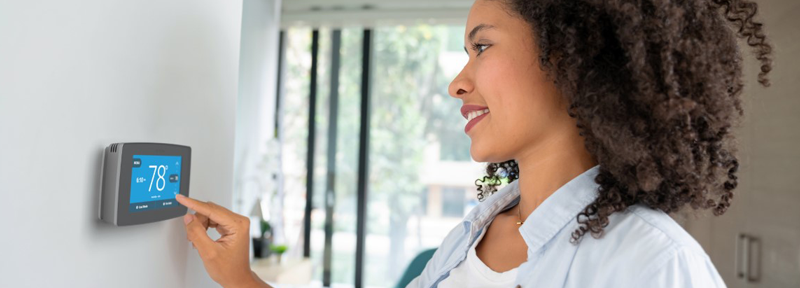
Air Conditioning Basics: Two-Stage and Variable Speed Systems

When making air conditioning recommendations to homeowners, having a firm grasp on the best options available and communicating which system will best suit their specific needs is essential. What is most energy-efficient? Which systems operate at optimal speeds? What will deliver ideal home comfort levels? These are all questions that homeowners will be seeking answers to when shopping for a new system.

While many homes still use the standard single-stage air conditioner, two-stage and variable speed systems provide better load matching, efficiency, and dehumidification. Learning more about their differences and benefits can help you guide customers toward making the best choice for their homes.

Two-Stage AC System

A two-stage compressor (sometimes labeled as “dual-stage”) works at two different capacities. The system varies its output as compared to a single-stage compressor, which only offers one level. Unlike single-stage, which either operates at 100% capacity or not at all, two-stage compressors can operate at two levels: high and low.

Rather than running continuously, two-stage systems either run at full capacity or kick to a lower setting – usually at 60-70% capacity – which uses significantly less energy than constantly turning on and off. As a result of the energy savings, a two-stage compressor typically has a longer lifespan and requires less repairs.

Variable Speed AC System

A variable speed system operates across a capacity range, which provides maximum energy efficiency and ideal home comfort levels. This system will make slight adjustments to its speed as needed to circulate even cooling throughout the house, resulting in precise temperatures, desired comfort levels, and effective dehumidification.

Unlike single-stage or two-stage systems, variable speed compressor systems rarely turn off. Instead, they typically operate below 100% capacity while varying speed to best maintain indoor setpoints. Since this system does not frequently power on and off, it provides substantial savings on electricity costs and generally allows for a longer lifespan.

Benefits of Each System

The two-stage air conditioning system is a good middle ground between the lower-end of single-stage and the higher upfront cost of a variable speed system. Compared to a single-stage system, it will save on energy costs while usually costing less than a variable speed system to initially install.

Variable speed systems run the most efficiently and are also quieter than most other air conditioners since they typically run at reduced speeds. These systems tend to offer the most savings on energy costs and provide better control over home temperature and humidity levels.

How to Choose the Best System

When helping homeowners come to the best decision for their home and lifestyle, find out what their long-term plans are. If they plan to stay in their home for several years, a variable speed system will save money and energy in the long run despite a higher installation cost.

On the other hand, if they are planning on staying in one place for a short amount of time, considering a two-stage system might make the most sense. Keep in mind, however, a higher-end air conditioning system could help improve the home’s resale value.

The size of the house also plays a factor in determining the best option. Newer systems like variable speed are often larger than older systems, such as single- or two-stage. It is important that there is enough space to house the equipment properly.

There are always more considerations, but they will likely be specific to the individual homeowner. In the end, it comes down to what will best fit the home, preferred lifestyle, and budget.


Read Next: What Is The Difference Between Rebuilt Compressors Vs. Remanufactured?
Rebuilt vs. Remanufactured Compressors

Central AC Not Blowing Cold Air? Here’s What to Do

On a hot summer day, your AC failing to blow cold air is the last thing you want. It seems it’s always during the hottest part of the summer that you realize your system is pumping out air but not cooling to the set temperature. What’s going on with your air conditioner, and what can you do to fix the problem?

Air conditioning systems typically include several parts that make up a whole, and the issue can stem from any individual part. Systems may include an indoor and outdoor unit, evaporator coil, air filter, thermostat, copper tubing, etc. Sometimes you as the homeowner can troubleshoot and fix the problem yourself, and other times you will need to contact HVAC support for a technician to come out and take a look.

There are several reasons why your air conditioner may not be blowing out cold air, and there are some steps you can take to remedy this situation.

Reasons Why AC is Not Cooling


Thermostat Check

One of the simplest reasons for AC to run without cooling off your home may be that the thermostat is set incorrectly. Check to make sure that the temperature setting is on cool. If the switch is set to “on” or “fan”, change it to “automatic” and see whether that starts to make a difference. When the thermostat is set to “on”, the fan runs continuously even when the air is not being cooled. Sometimes a change in the settings is all you need.

Dirty Filter

If your thermostat is set up properly and the issue persists, you should next check the system’s air filter. It is there to catch airborne dirt and particles and over time becomes filthy. A clogged filter inhibits airflow, reducing cooling throughout your home.

Remove and inspect your air filter. If two or more months have passed since changing it out, or if it is too dirty to see through, replace the filter and see whether that solves the problem.

Dirty Condenser Unit

The condenser, which is located outside, collects heat from your home’s interior. If the condenser coil is jammed with dirt, grass, or other debris, it is unable to release the heat built up in its system. This can lead to AC malfunctions and sometimes even a system shutdown.

To clean the coil, carefully clear away the dirt and debris and gently rinse it with a hose. Do not use high pressure so that you don’t bend any of the “fins” that make up the coil.

Frozen Evaporator Coil

The evaporator coil is located in the indoor section of your AC system. Warm air flows into the evaporator coil, removing heat and humidity from inside and pumping cool air into your home. The evaporator coil may be frozen if you notice excess condensation near the indoor unit, insufficient ventilation, or frost build-up on refrigerant tubing.

Refrigerant Leak

Refrigerant is necessary for cooling. It flows through the condenser and evaporator coils and draws heat energy from indoors to release it outside. A refrigerant leak prevents heat absorption and can cause a lack of cold air to blow. If you see ice buildup on your outdoor unit or feel warm air coming from your ventilation, this is often a sign of a refrigerant leak.

Damaged Heat Pump

Some AC systems may include a heat pump as the outdoor unit. It functions similarly to a regular AC unit and may be prone to the same sort of problems. Check on the thermostat settings, air filters, and for signs of clogged coils if the heat pump is not providing cooling to the interior.

While you can fix some of these problems on your own through regular checks and cleaning, you will need to contact an HVAC technician to come out for other major issues. When in doubt, bring out an HVAC professional to assess your system so that you don’t risk causing further damage. By maintaining your system and having regular inspections, you can ensure that your system remains running in pristine condition.


Read Next: Thermostats: Keeping Your Home Cool During Summer

Keep your home cool during summer

A Contractor’s Guide to Humidity Control

Comfort Basics

Humidity is a key factor when it comes to interior comfort. Low or high RH can cause physical discomfort for the occupants and can damage products inside the building such as instruments or hardwood flooring. High humidity over time can become a health hazard, creating an environment for mold and bacteria growth, especially in levels above 50-70%. Interiors with high humidity are an ideal space for odors to develop, asthma to worsen, and condensation that can damage buildings.

Comfortable interior humidity levels vary based on location and climate. ASHRAE Standards state that the ideal ranges for comfort in the winter are 68 °F – 74 °F at 40-60% relative humidity. In the summer, this range is 73 °F – 79 °F at 40-60% relative humidity. These levels provide the best levels for comfort and for preventing unwanted microorganism growth and changes to building materials and fixtures.

Challenges with AC Sizing

As homes have become more energy efficient with better insulation and ventilation, contractors have been able to rethink AC sizing since cooling loads have shrunk over the past several years. However, although cooling loads have shrunk, latent loads (which involve moisture and humidity) are not as readily reduced. Because AC sizes have been optimized to better meet cooling loads, they may not be optimized for latent heat (humidity in the air) removal. More than ever, it is important that HVAC systems are correctly set up to remove moisture. If they are not properly installed to maximize humidity control, a possible result is cold and humid homes where the moisture in the air can develop into mold and cause structural damage.

Naturally, if the air conditioner is too small for the building, it will not be able to remove all of the humidity in the space or provide the proper cooling at times. On the other hand, when an AC unit is oversized, the system does not run as frequently due to its larger size. It quickly brings down the temperature, but the humidity itself is not removed in such a short time.

Now, it is more important than ever to perform a load calculation and determine the heat loss and gain of every building where an HVAC system is going to be replaced.

Fan Speed Adjustments

To ensure that the building’s HVAC system is working at maximum efficiency for controlling humidity levels, the fan speed needs to be checked and adjusted if needed. Any changes will be based on the size of the AC paired with the furnace and ductwork capabilities to make sure that the setups and sizes match and run together efficiently.

Lowering the fan speed is one way to control a large amount of interior humidity. A colder evaporator coil can remove more moisture from the air, but it is important that the evaporator coil doesn’t freeze. This would mean that it could no longer absorb sufficient heat and would block air from blowing across the evaporator coil; a condition like this can damage the compressor. Make sure to first understand what the thermostat, blower board, and motor are capable of and are already doing before making adjustments. Another precaution to keep in mind is that if the fan speed is overly low and is combined with an Electronic Air Cleaner, ozone may be produced, causing harm to the occupants’ health.

Unfortunately, when the fan remains running at a slower speed, this can lessen the overall efficiency of the system. However, when the AC works continuously at a low speed, interior humidity is reduced, and temperatures are more balanced.

Summary

In order for your HVAC system to run correctly and dehumidify the interior space efficiently, your equipment needs to be sized correctly before installation or replacement installation needs to be done properly with fan speeds set to the desired speed for a balance of efficiency, even temperatures, and moisture reduction. Equipment controls should also be set to a point that will best optimize the system.


Read Next: Top 5 Things a Homeowner Expects in Their HVAC System

humidity control

HVAC in the Midwest: What’s the Best System for My Home?

Replacing or upgrading your HVAC system is an important decision to make. Efficiency is always a top priority, especially since HVAC usage accounts for about 48% (on average) of a home’s energy consumption. The decision often leans heavily on location since climate frequently dictates what is practical for a home. Central furnaces remain the most prevalent heating option across all regions in the U.S. residential market, with gas and electricity used as the primary types of fuel. Heat pumps have grown in popularity in southern areas due to the milder climates but are typically not suitable further north.

AC & Furnace Split System

This type of split system utilizes a central air conditioner and an electric, propane, natural gas, or fuel oil furnace. The furnace produces heat in the winter, distributing it throughout the entire home, while the air conditioner draws out heat during the summer and transfers it outdoors.

An AC and furnace split system is a popular solution that combines the heating capabilities of a furnace with the cooling capacity of an air conditioner. This HVAC combination allows the homeowner to control their heating and cooling from a single thermostat, saving both energy and money.

Dual-Fuel HVAC System

A dual-fuel system uses a furnace alongside an air source heat pump. A heat pump is able to both heat and cool down your home, providing comfort in all seasons. It keeps your home heated in the winter with heat transfer technology and removes hot air from inside the home during the summer to maintain a cool interior.

Heat pumps can heat your home most efficiently when the outdoor temperature ranges between 25 °F – 60 °F. Due to the nature of the Midwest, there are times during the winter when freezing temperatures reach well below 25 °F, and a heat pump on its own will not provide the necessary heat. This is when a backup furnace will come into play and take over to provide the heat needed to keep your home comfortable and warm.

Mini-Split Heat Pump System

These systems are ideal for homes that do not have ductwork and may be using older, more expensive heating solutions like fuel oil. They are also a good option for garages, bonus rooms, etc. Upfront installation costs are frequently higher than other systems but may be assisted with reduced energy costs and potential utility rebates.

Geothermal HP System

Geothermal systems work differently from a traditional furnace. The systems use pipes below the ground where circulating water is warmed in the winter and cooled during the summer. Since it is easier to gather heat below ground than it is to capture heat in freezing air or to release heat into summer air, geothermal systems are very energy efficient and environmentally friendly. However, these systems usually have a higher installation cost than other HVAC solutions.

Consider some of the following factors when choosing the right HVAC system for your home in the Midwest:

  • Upfront costs to replace your system or to install in a new home
  • Climate for both summer and winter
  • Energy efficiency/long-term costs the cost payback
  • How environmentally conscious you’d like to be

Put Money Back in Your Pocket

Did you know? The federal government offers a variety of tax credits to reduce the capital costs associated with implementing renewable energy and energy efficiency home projects.

If you live in the Midwest, keep track of rebates and incentives available in your area here.