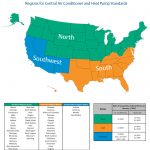
The air conditioning needs of the muggy, humid southeast summers require different methods for sizing and equipment selection than the hot, arid summers in the southwest. In certain parts of the country, the quality of electric power distribution causes brown-outs or worse.
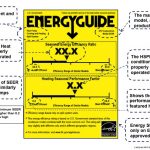
These labels can be helpful when you are trying to compare equipment from one manufacturer to the other. Because of these national regulations, you can be confident that the ratings are accurate and enforced through periodic testing.
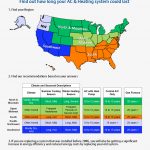
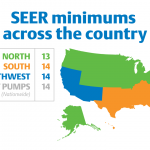
The Energy Independence and Security Act of 2007 provided for the next round of government regulated standard efficiencies allowed for air conditioners sold in the Unites States.
Good contractors will do a lot more than ask you how much you want to spend on a new system. When selecting the best air conditioning and heating system for your needs, contractors consider…
It is a myth that age alone can make a system fail, so be wary of anyone that tells you otherwise. If you are considering repairing or replacing your old unit, you need to look at how often you run your system.
For the most part, residential air conditioners and furnaces don’t require constant upkeep to maintain good working order. However, there are certain things you can do to keep your system running optimally throughout the year.
When it comes to cars, we evaluate efficiency based on miles per gallon. With residential air conditioning, efficiency is measured by SEER, or Seasonal Energy Efficiency Ratio. In effect, the higher the SEER rating, the more efficient the system will be. The U.S. recently adopted minimum SEER requirements, currently 13, and any system over 16 SEER is generally considered high efficiency. A SEER rating over 20 is in the highest efficiency group.